Monday, May 7, 2007

AMG + AQR = IPO

Affiliated Managers Group (AMG) has been around since 1994 and public since 1997, but in the past few weeks they can't seem to find their way out of the news -- and for good reason. The firm, which buys stakes in boutique money management firms, currently has an impressive portfolio of firms under its umbrella: Third Avenue Management LLC ($26 billion AUM), Tweedy, Browne & Co ($14 billion AUM) and First Quadrant LP ($33.5 billion AUM) to name a few. The genius behind the company is founder William J. Nutt. Under Nutt's guidance AMG invests in well run money management firms but leaves management with a large enough equity stake that they still have an incentive to grow. The hands off management style means Nutt and CEO Sean Healey can worry about how to manage cash flow and growth, not micromanage successful investors. Their philosophy has served them well. Since its IPO the company has offered a 23% CAGR to its investors.

With all the news of hedge funds and private equity firms going public it makes sense that investors are interested in AMG. One of AMG's crown jewels is hedge fund AQR Capital Management, the quantitative hedge fund shop started by Goldman quantitative research group grads Clifford Asness, David Kabiller, Robert Krail and John Liew. Their assets have ballooned from roughly $13 billion in 2005 to over $35 billion today, making them roughly the size of FIG. Much of this growth has come in the three years since AMG acquired a stake in AQR back in 2004. AMG's 25% (est.) stake which it purchased for $250 million (est.) could be worth north of $5 billion today. If AQR does indeed become the third major firm behind Fortress and Blackstone to tap the public markets it could mean a boon to AMG and its investors. The upside is that AQR is just one of 25 firms that AMG owns a stake in. The impressive performance of AMG's stock over the last decade looks like it might continue for quite a bit longer, but is it enough to justify its price tag at 32 times earnings? Remember, investment banks like Goldman, Lehman and Merrill trade around 10 times earnings and Fortress is trading near 24 times earnings. A P/E of 32 is the realm of BlackRock, Eaton Vance and Janus . . . that's expensive company. AMG would probably be wise to take some of its chips off the table now as long as investors have an appetite for investment management companies.

Saturday, May 5, 2007

Buffett vs. Lebron


BUFFETT vs. LEBRON

Who would you take in a 1-on-1 basketball game?

This weekend is Berkshire Hathaway's annual shareholder meeting held in Omaha, Nebraska. It is estimated that some 27,000 shareholders will attend, many of whom will be able to ask questions of Warren Buffett and Charlie Munger during the 6 hour long Q&A session.

As usual Buffett throws in a joke or two to keep things light. This year he featured a video of himself playing 1-on-1 basketball against Lebron James. I have money on Buffett. I haven't been able to get the video up on the site yet, but as soon as I track it down I will . . . .

Friday, May 4, 2007

The Friday Roundup

I have far too much to write about today. So instead of boring you, I encourage you to browse through the articles listed below and click on what interests you:

Hedge Funds
  1. Applied Quantitative Research (AQR) is rumored to be considering a public offering. I intend to write a full blog post on what this means for investors so stay tuned.
  2. UBS is closing its 2 year old hedge fund because of sub-par returns resulting from subprime exposure.
  3. Tobias Adrian, an economist at the New York Fed, alluded to LTCM in his analysis of systemic risks in the hedge fund industry. Is more regulation on the horizon?
  4. An event that should help soften the hedge fund industry's image - the Robin Hood benefit - went off without a hitch. (unfortunately it sounds more like a gaudy display of wealth than a charity benefit)
Private Equity
  1. The Senate just can't let go of the "carried interest" issue. They see the money PE firms and Hedge Funds are making and they see an easy cure to their budget/AMT issues.
  2. Cablevision accepted a big $10.6 billion buyout bid from the Dolan Family.
Economy/Fed
  1. GDP growth fell to 1.3% in the 1Q2007, below the 1.8% estimate and well below the 2.5% rate of growth in 4Q2006.
  2. Core Inflation (inflation ex-inflation) for March came in at 2.1% which was a comforting number, though still above the 2% Fed comfort level. CPI data is due out May 15th (expect this to be higher).
  3. U.S. job growth slowed in April. The unemployment rate rose from 4.4% to 4.5% which should help the Fed leave the fed funds rate stable at 5.25%.

Mergers & Acquisitions
  1. The Dow Jones drama continues: the Bancroft family is probably a little nervous about what Murdoch will do to their beloved Journal (see below, click to enlarge):
  2. Another Huuuge Media deal is "unofficially" in the works: Reuters confirmed they have been approached.
  3. The New York Post reported that Microsoft is looking at Yahoo! as a potential acquisition target. I don't know how much weight I'd put on this one.

Real Estate
  1. Goldman Sachs thinks California home prices will weaken further.
  2. Some people want to remove housing from GDP. Caroline Baum thinks that is ridiculous.
  3. Piggington reminds us why following the Median home price can be a faulty indicator. Rich and I prefer the Case-Shiller Indices.
  4. Yet another journalist has come out and "called the bottom" in the housing market. I think articles like this are almost criminal. If people rely on faulty information to make a home purchase they could do a lot of damage to themselves financially before all is said and done. Check out the graph below and let me know if you agree with me that such a call may be a bit immature (click to enlarge):

Thursday, May 3, 2007

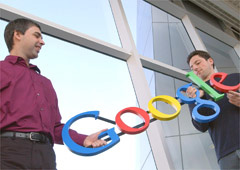
Google Unseats McKinsey in Battle for Human Capital

Every now and then you read an article that stays with you for years. It is usually because a thought in the article was so novel and intriguing that it changed the way you approached an important part of your life. That article for me was written by WSJ journalist Rich Karlgaard in the summer of 2004. In it he detailed an impromptu discussion he had with Bill Gates on a cross country plane flight. Rich details the experience:

"Out of nowhere, (Bill) told me that he had recently figured out who his competition was. It was not Apple, Lotus or IBM. He waited a couple of beats. "It's Goldman Sachs."

"Is this a scoop? Is Microsoft getting into investment banking?"

"No," he said. "I mean the competition for talent. It's all about IQ. You win with IQ. Our only competition for IQ is the top investment banks."

To many this "Battle for IQ" is old news, but at the time this was a big "Aha" moment for me. It made sense. Goldman does not directly compete with Microsoft in software development, but clearly they draw from the same pool of human capital. For years firms like Goldman, McKinsey and Microsoft have managed to attract the best and the brightest, building themselves into veritable brain trusts. However, every now and then a new company comes out of nowhere to attract more of the top notch talent. Below is the results of the latest survey -- courtesy of Universum and Fortune -- that ranks employers by the percentage of MBA students who rank the company in their top 5 most desired places to work (click to enlarge):

Famed consulting shop McKinsey & Company had enjoyed a 12 year reign at the top only to be unseated this year by Google. Yes, Google leads Goldman by almost 50% and is ahead of Microsoft by 300%. So what can we take from this? Well, for starters companies that attract and retain the best and the brightest are winning what may very well be the most important game: the "Battle for IQ." But, perhaps more importantly, in the battle for human capital, no one stays on top forever.

With Inflation Tame, Fed Will Hold Rates

I've been wrong before but I think it is safe to say that at their meeting on May 9th the Federal Open Market Committee (FOMC) will find it in their hearts to hold rates steady at 5.25% for the seventh straight meeting. After the Fed's two day meeting on March 20th-21st rates were left unchanged and the markets threw a party. While I don't expect to see the market react quite so jubilantly this time, I do believe the Fed is in a 'wait and see' mode that probably won't change in the near future.

Ben and the rest of the Fed members are focused on two things right now:

  1. Inflation (ex-inflation): Inflation has been above the Fed's comfort level for quite some time now and the moderation they have predicted has failed to materialize. The "core" price index (sans food and energy, "inflation ex-inflation" in Ritholtz-speak) was up 2.1% in March, compared with 2.4% the month before. Remember the Fed's "comfort level" is 2%, so while 2.1% was a positive development the Fed will likely still call this "elevated." Be that as it may, 2.1% is still cause for minor celebration and took a lot of the mystery out of the Fed decision next week.
  2. Unemployment: Big Ben wants to see unemployment tick up signaling further slowing of the economy. What Ben has gotten thus far is slower growth and lower unemployment. The danger, according to the WSJ, is that "growth in productivity, or output per worker, has slowed. That would mean companies would have to hire more workers for a given increase in sales. If those companies raised wages to attract those workers -- as they have lately -- they would face a choice between raising prices and accepting narrower profit margins." In other words, slowing productivity could lead to . . . you guessed it, inflation! Everyone knows we don't want that, so let us all hope that more Americans were laid off this month so that the unemployment number ticks up to 4.5 or 4.6% when released tomorrow morning (I love jobs, just not when the Fed is worried about productivity!).

Source: "Fed Likely to Stand Pat on Rates"
Author: Greg Ip

Wednesday, May 2, 2007

Froth in Commercial Real Estate

The news media has been intensely focused on the subprime lending crisis ever since some of the largest monoline subprime lenders went belly-up earlier this year. However, years of cheap money and loose lending standards did not only effect the residential real estate market. In many cases commercial real estate lending standards were just as loose as residential lending standards. In a New York Times article this morning Jim Duca (pictured above) of Moody's warned "underwriting has gotten so frothy we have to take a stand."

Jim isn't the first one to cry foul about commercial lending standards. Many were shocked when it was revealed that Blackstone's huge $36 billion Equity Office Property was priced with a sub 5% cap rate. I don't know about you, but locking up such a substantial amount of money at under 5% seems like a waste. In their defense, Blackstone had already lined up the sale of many of those properties at similarly ridiculous valuations and their own IRR calculations were undoubtedly rosier.

Due to structural differences between the residential and commercial markets, it is improbable that the commercial market will unwind as quickly as the subprime residential market. Commercial mortgages never got as exotic as the residential market and the interest only variety typically feature large balloon payments at the end of the term (typically 10 years). Due to these factors fallout may yet be years off. The root of the problem is not complexity of the loans, rather it is underwriters using inflated rent projections in their underwriting decisions and investors letting them get away with it.

For example when Blackstone bought EOP they had already reached a deal with Macklowe properties to sell off 5 midtown Manhattan office buildings in the EOP portfolio. The buildings currently rent for $55-59 a square foot but the projections in the Macklowe pro forma called for rents to increase to over $100 a square foot. Without those rent projections it is unlikely Macklowe could have justified buying the properties for $7.25 billion. Relying too heavily on exponential income increases like those in the Macklowe deal are the surest way to get the attention of guys like Jim Duca at Moody's. As the credit agencies tighten up investors demand higher interest to offset their risk, putting pressure on lenders. Though this will slowly squeeze the spigot of cheap money it may be too late for many who -- like subprime borrowers currently watching their equity fall and mortgage rates rise -- might quickly be underwater when rents moderate and the income isn't enough to cover their encumbrances.

The question is, how much excess has their been and when, if at all, will this effect companies like Credit Suisse, Deutsche Bank and GE?

Tuesday, May 1, 2007

Bancroft Family Is Holding Out

This afternoon Michael Elefante (pictured, right), a Dow Jones board member and representative of the Bancroft Family Trust, announced that the Bancroft family intends to turn down Rupert Murdoch's $5 billion offer for Dow Jones. This was the move that I anticipated. Any good fiduciary would have told the family to hold out for a better offer. It is my personal belief that the family members are surely aware that if they play their cards right they could get a 20-25% premium on the current offer before all is said and done.

Remember, the Bancroft voting shares are not consolidated into 1 or 2 hands. It is estimated that roughly 20 family members control a significant percentage of voting shares. Though they control 65 % of the company, currently shares representing "slightly more than 50% of the outstanding voting power" will vote against the sale. In other words, even at $5 billion the Bancroft family isn't voting all together. If the right price is reached enough family members will agree, and Dow Jones will be sold. This, if anything is encouraging news for News Corp.

The article I read over at Dealbook mentions the potential for a sweetened News Corp. offer. I think they probably will lob another offer up to the plate, I just don't think they will be the only ones.

Will Rupert Murdoch Finally Get Dow Jones?

After a seemingly interminable wait News Corp. finally offered an unsolicited bid for Dow Jones (DJ), the proud owner of the Wall Street Journal, Barron's, Dow Jones Newswires and MarketWatch.com. The bid, which at $60/share represents a 65% premium to DJ's closing price, led some analysts to call it "rich." While $5 billion is no small offer it may not actually be enough to buy DJ.

To be perfectly honest, though this deal has been rumored for years I originally did not have DJ on my short list of potential takeover targets. I left DJ off largely because Rupert Murdoch has been sniffing around DJ for years and never decided to make an offer. The reason? In order to buy Dow Jones one must essentially get the consent of the Bancroft family. The Bancroft family controls between 60 and 65% of the company. They accomplish this through a dual-share structure, Class A common and Class B voting shares. The family controls roughly 15% of the common and 75% of the Class B shares. The company doesn't exercise their influence quietly either. Of the 14 directors on Dow Jones' board 4 have direct ties to the family and it is assumed that a fair share of the other 10 are sympathetic to the family. Family control over the board may partially explain the miserable performance of DJ stock over the past 10 years; before Murdoch's bid DJ still traded 15% below its stock price from 1997.

The Bancroft family will be reluctant sellers and it is likely they will hold out for a bidding war before they agree to a sale. Now that the company is "in play" it should enjoy plenty of suitors. The Times, the Washington Post and Bloomberg are all listed as potential buyers, though I feel the company is ripe to be taken private. With so many private equity firms sitting on billions of dry powder (Carlyle, Goldman, Blackstone etc.) it would seem unlikely that one of them wouldn't take a stab at DJ. I haven't done thorough due diligence but I would imagine, given the company's sloppy acquisition track record and poor leadership, that somewhere in the $1.8 billion of revenue there is some fat to trim and underneath that some unlocked value. Look for news of a competing bid by early next week. If we don't see a bid it will mean Murdoch was further along than we all thought when DJ released it over the wire.

Disclaimer

The content on this site is provided as general information only and should not be taken as investment advice. All site content, including advertisements, shall not be construed as a recommendation to buy or sell any security or financial instrument, or to participate in any particular trading or investment strategy. The ideas expressed on this site are solely the opinions of the author(s) who may or may not have a position in any company or advertiser referenced above. Any action that you take as a result of information, analysis, or advertisement on this site is ultimately your responsibility. Consult your investment adviser before making any investment decisions.