Thursday, May 31, 2007

Bancrofts to Meet with Murdoch

In a dramatic shift in the Dow Jones saga, representatives of the Bancroft family will meet with Murdoch's News Corp. to discuss the $5 billion offer that is on the table for the company. They made clear in their statement that they are open to other offers:

"As we have been since 1902, the Bancroft Family remains resolute in its commitment to preserve and protect the editorial independence and integrity of The Wall Street Journal, as well as the leadership, strength and vitality of The Journal and all of the other publications and services of Dow Jones.

"Since first receiving the News Corporation proposal, the Family has carefully considered and discussed among ourselves and with our advisors how best to achieve that overarching objective, while serving the best interests of the Company's various constituencies.

"After a detailed review of the business of Dow Jones and the evolving competitive environment in which it operates, the Family has reached consensus that the mission of Dow Jones may be better accomplished in combination or collaboration with another organization, which may include News Corporation.

"Accordingly, the Family has advised the Company's Board that it intends to meet with News Corporation to determine whether, in the context of the current or any modified News Corporation proposal, it will be possible to ensure the level of commitment to editorial independence, integrity and journalistic freedom that is the hallmark of Dow Jones.

"The Family also indicated its receptivity to other options that might achieve the same overarching objective."

New York Times: "Bancroft Family Agrees to Meet with Murdoch"

Wednesday, May 30, 2007

China Dips, S&P Rallies

This is from Paul Hickey. It seems the Chinese and US stock markets have seized their strange coupling:

"We all remember the large declines in China's equity markets back in late February. The Shanghai Composite fell 8.8% on February 27th, and the S&P 500 followed suit by falling 3.4%. Investors also remember how quickly the S&P 500 made back those losses, and the next time China had a large decline (-4.5% on 4/19), the S&P was only down 10 bps. Today we saw another large drop in Chinese equities, as the Shanghai Composite fell 6.5%. This time, the S&P 500 was actually up 80 bps on the day. So while we continue to read about investors fearing a bubble in Chinese equities, today's drop didn't seem to affect them too much."

See the original blog post here.

Tuesday, May 29, 2007

Is Goldman Sachs Taking Over Washington?

This morning President Bush announced the nomination of Robert Zoellick for the top spot at the World Bank. Zoellick has an impressive resume, having served as George H.W. Bush's Chief of Staff and as the deputy Secretary of State in 2005-06. Over the past year he has been killing time as an executive at Goldman Sachs. This, of course, should not come as a surprise. In what is becoming quite an impressive trend for Goldman alums, Zoellick is walking the well-trodden ground between 85 Broad Street and the Capital City.

Robert Zoellick follows fellow Goldman Alums Robert Rubin (he is at Citicorp now) , Hank Paulson, Josh Bolten and Jon Corzine into the political fray. However the list of Goldman alums who hold positions of power in Washington goes on and on from there: James Johnson, Kenneth Brody, Stephen Friedman, John Whitehead, Rajat Gupta, Robert Hormats etc. This list is by no means exhaustive, but I think you get the picture. I've written numerous times in the past about Goldman and its battle for human capital. For all intents and purposes it doesn't look like Goldman's ability to capture top talent has waned at all in recent years, now if it could only hold on to its top employees longer before they bolt to Washington . .

Amid Flurry of Deals, Signs of a Top

Today a multitude of deals came to light after the holiday weekend:

  1. Tishman and Lehman are buying Archstone-Smith for $12 billion.
  2. Avaya is selling off pieces to private equity firms.
  3. Madison Dearborn is in talks to buy CDW for over $6 billion.
  4. URS agreed buy the Washington Group for $2.6 billion.
But, even now in the midst of an unequaled private equity frenzy some warning signs are beginning to emerge. Just last week investment bank Goldman Sachs placed a freeze on hiring. Seems odd that amidst record profits and a tons of private equity related fees that Goldman would see fit to "pause" hiring. Many in the private equity world have seen fit to apply the brakes as well. Here are some quotes from the titans in the industry:
  1. Timothy Collins, CEO Ripplewood Holdings: Current private equity conditions are a "bubble that could end badly."
  2. David Rubenstein, Carlyle Group co-founder: "There hasn't been a failure for five years. We need to prepare people for the reality that some deals will fail," he said. He added: "Greed has taken over. Nobody fears failure."
  3. Bill Conway, Carlyle Group co-founder warned his firm's investment professionals about froth in the buyout market and instructed them to be careful in their deal-making.
  4. Steven Schwarzman, founder of the Blackstone Group warned that the biggest risk in the private equity market is "high prices."
  5. David Bonderman, founder of TPG: "Almost everything can go wrong now. . .Two years ago, we slowed down. Last year we got unskeptical. This year we are more cautious again."
It seems the only one who hasn't slowed down is Henry Kravis, and it doesn't seem like he has any plans to stop. KKR has been a part of $120 billion of deals this year including 5 of the biggest 8. They probably have a blockbuster or two left in them as well. So while I won't be the fool to call the end of the private equity boom, I do believe a fair number of the deals announced this year will not work out quite as well as they were penciled.

Thursday, May 24, 2007

Yield Curve Normalization?

Bespoke Investment Group noted that on May 18th the yield on the 3-month treasury closed above the yield on the 10 year treasury (2.799% vs. 2.800%) for the first time in 217 trading days. The yield curve has since inverted again but it is likely that investors will be hearing more about the yield curve in days and months ahead.

Sunday, May 20, 2007

China Buys Stake in Blackstone

It was announced today that China will set up a state investment company in order to buy a $3 billion stake in the Blackstone Group, the US private equity firm. The stake will be less than 10% and the planned IPO of Blackstone will proceed unchanged. It has been rumored for quite some time that China was going to diversify away from holding US treasury notes in an attempt to be more aggressive and increase its ROI. However, few expected that China's first major move would be to buy a $3 billion stake of Blackstone. Most expected China to proceed cautiously, investing in blue chips stocks more like a pension fund. If China does have as large a risk appetite as this deal indicates, they could quickly become one of the largest investors in the world.

Today China has $1.2 trillion of foreign exchange assets of which $200-400 billion could be pumped into the new investment company. When China puts these assets to work they have the power to literally move markets the world over. The global liquidity boom is going to get another large shot in the arm. Chances are China will model their investment company after Singapore's state run entity - Temasek holdings. Temasek, which manages roughly $60 billion USD, was started in 1974 and has achieved an impressive investment track record. But, even at $200 billion China's investment arm dwarfs Temasek in size.

While the Blackstone deal may be a bit of a surprise to China observers this isn't a shocking move for Blackstone. Months before the IPO of Fortress Investment Group the company sold a 15% stake to Tokyo-headquartered Nomura holdings. So it makes sense that Blackstone would seek to do the same. The major difference is that 15% of FIG cost Nomura $888 million and <10% of Blackstone will cost China $3 billion.

The most interesting sub-plot in this is the role of Antony Leung. Leung is Hong Kong's former finance secretary, is an independent director of China's largest bank, is the former Asia chairman of JP Morgan and was hired by Blackstone in January to run its China business. It seems fairly clear that Mr. Leung paid immediate dividends for Blackstone in the negotiations leading up to the sale.

Source: China to Take Stake in Blackstone
Kate Linebaugh and Andrew Batson

Saturday, May 19, 2007

The End of the Yen Carry Trade?

Much has been made of the prevalent role of the Yen carry trade in today's market. So let's start with a little education. What exactly is the Yen carry trade? Here's the definition via the San Francisco Fed:

In the most common version of this strategy, an investor borrows a given amount in a low-interest rate currency (the “funding” currency), converts the funds into a high-interest-rate currency (the “target” currency) and lends the resulting amount in the target currency at the higher interest rate.
In today's market the "funding" currency is often the Yen which the BOJ has kept at or near 0% for over a decade as they attempt to jump start their economy. The target currency is often the USD, as hedge funds and insurance companies have crowded into the strategy to bump up their returns. So how does the carry trade effect the markets? (from Gillian Tett at FT.com):
Just how large the carry trade is, nobody really knows ... But whatever the precise number, what is clear is that carry trades have been fueling the dash into risky assets in the past couple of years.

After all, with Japanese interest rates at rock bottom and the yen on a downward path, it has been frighteningly easy for any hedge fund to borrow in yen, invest in something yielding, say, 5 per cent a year, apply a bit of leverage and – hey presto – produce returns of 20 per cent, or more. Conversely, if an investment bank wants to create a collateralised debt obligation but cannot sell the riskiest debt tranche, it can put this on its own books – funded by ultra cheap yen. The yen has thus been tantamount to the ATM of the global credit world – spewing out (almost) free cash.
So when will the carry trade end? It certainly looks as if Japan's economy is finally growing. Though the weak first quarter numbers, 2.4% annualized, left a little to be desired the growth is solid and should be sustainable. While no rate hike is currently expected, if you read into Toshihiko Fukui's rhetoric he has left the door open to raise rates above 0.5% even if consumer prices continue to fall as long as growth continues. So don't be surprised if by the end of 2007 the Yen reverses trend in FX markets against the USD and wipes away the carry trade. Using the past as a guide, the last major period of Yen carry trade activity was from the summer of 1995 to October of 1998. In October of 1998 the Yen appreciated 18% in just three days, burning many in the process and contributing to the meltdown at Long Term Capital Management. Unfortunately exchange rate movements are notoriously difficult to predict. When the Yen does recover it is safe to say that the fluctuation could be dramatic and the unhedged will be hurt badly. For more on the Yen carry trade check out these links:

Wednesday, May 16, 2007

Eddie Lampert to the Rescue?

Citigroup (C) is a $270 billion conglomerate that has seen its stock price languish over the past 5 years. Disgruntled shareholders haven't been able to get much done thus far and it seems the Board is giving CEO Chuck Prince all the time in the world to make a change. Many on the street think Citigroup is prime for a major restructuring and most feel that Prince is on the hot seat. Well that hot seat just got a little bit hotter.

Yesterday Eddie Lampert's ESL Investments disclosed that it has accumulated a 0.3% stake in the company worth roughly $800 million. ESL boasts an impressive investment track record and expertise in turnaround situations - just look at Lampert has done with Kmart and Sears. Investors welcomed Eddie to the party by sending Citigroup's stock up 4% today on the news. Lets take a second here to recap: ESL buys 0.3% of Citigroup and the company's market cap rises by over $10 billion. Suffice it to say the market may have overreacted a bit to news of ESL's arrival. But then again, the only time this stock has moved in the past 5 years is when there are talks of a potential restructuring.

So the question remains, what exactly are Mr. Lampert's intentions with Citigroup? In my opinion Lampert's 0.3% stake will not be enough to cause change, even with Lampert's clout and capital. Though I agree with the WsJ that the company should not take Eddie's arrival lightly. After all it is hard to imagine that Lampert would commit $800 million of his firm's capital without the intent to be actively involved. My guess is that Chuck Prince won't be around too much longer. I bet many at Citigroup are wishing they could have Jamie Dimon back . . .

Whatever the outcome to this saga the real allure for me is the great cast of characters.

  1. Prince Al-Waleed is Citi's largest shareholder and also the 5th wealthiest man in the world.
  2. Eddie Lampert is a billionaire and a veritable legend in the hedge fund world.
  3. Robert Rubin is the former Secretary of the Treasury under Clinton and a colleague of Lampert at Goldman Sachs. He is also the author of In An Uncertain World, an amazing book on decision-making under conditions of uncertainty.
  4. Sandy Weill helped build Citigroup as its CEO, retains a seat on the board and still controls a stake worth just under $1 billion.
  5. Chuck Prince, the beleaguered Citigroup CEO and longtime Weill loyalist.
  6. And the list goes on and on.

New Economic Data

This week has already been a busy week for economists. Below are the key stats:

  1. Core CPI was up 2.3% from a year ago which was the slowest annual pace since April 2006. Most economists felt that this was a good number and many hope that if CPI continues to moderate the Fed will remove its tightening bias.
  2. Housing Starts unexpectedly rose 2.5% in April marking the third straight monthly increase, but are still off 16% from the year before.
  3. Housing Permits declined 8.9% in April, the worst drop since 1990. Permits are now over 40% off of their 2005 peak.
What can we take from all of this data:
"The economy is slowing, led by the housing sector. Core inflation appears to be moderating as the Fed has expected. If growth and inflation continue to fall the Fed should remove its tightening bias. The largest dangers remain the risk that the housing market grinds the economy to a halt or that inflation spikes up unexpectedly forcing the Fed to hold or raise rates going into 2008."

Sunday, May 13, 2007

Should We Be Concerned about the US Consumer?

In the past few weeks former Fed chairman Alan Greenspan, Warren Buffett's sidekick Charlie Munger and hedge fund manager turned retailer Eddie Lampert voiced their concerns about weakness in consumer spending. I share their concern. Here is the case made in words and graphs.

1. Why We Care About Consumption: Consumption as a share of GDP has been slowly rising for years. Today consumption makes up roughly 70% of US GDP and a full 20% of the global economy. As such, weakness in US consumption has a greater impact on our economy and indeed the world economy than any other factor. Even a modest pull back in consumption will have ripple effects the world over:
In Q12007 this effect has been even more profound. Consumption is quite literally the only component of GDP that had a significant positive impact (click to enlarge):
2. The Real Estate Threat: The most direct assault on US consumption comes from the housing market, directly through the role of construction and indirectly through the wealth effect and mortgage equity withdrawals (MEW). The construction data is not rosy. Home builders have begun to lay off workers and warned on earnings. The housing start/permit data is very straightforward:

The wealth/MEW data is a little more difficult to gauge. Combined the Dallas Fed estimates that a $100 increase in home equity leads to between a $6 and $9 increase in long run consumption. Of that perhaps $2.50 - 5 may be immediate consumption. In April Greenspan and Fed Economist James Kennedy released a study estimating that MEW made up 4% of Personal Consumption Expenditures in 2006, which is in line with the Dallas Fed number. Whatever the actual number is, we know that it is significant. Because this issue is so hotly debated and so difficult to forecast it is difficult to say just how badly consumption may be hurt by home price declines. At the very least it should be clear that home price and home equity declines will probably not lead to higher consumption. The sheer volume of the MEW effect can be seen below:

3. Food and Energy Inflation: The other great threat to the US consumer is inflation, specifically increases in food and energy prices. The "core inflation" that the Fed is so fond of strips out food and energy, making it a useless number when measuring the impact on the average consumer who eats food three times a day and gets 12 miles per gallon driving to work in their new SUV. If you dig into the CPI data from March you'll find that although core inflation was a relatively innocuous 2.3%, over the last three months the energy component inflated at a 22.9% CAGR and food at a 7.3% CAGR. Over the past three months, inflation as measured by CPI was 4.7% and in March alone the figure was 7.5%. The bottom line is that inflation has picked up in recent months and has exacerbated the problems facing consumers. Much of the inflation is coming directly from retail gas prices and it is fairly easy to see why, check out the graph of retail gasoline prices over the past 6 years (click to enlarge):


4. Evidence of Weakness: April was the first month that weakened consumption actually started showing up in the numbers (Barry Ritholtz has been giving us anecdotal evidence for months). The retail sales data released on Friday showed an unexpected decline of 0.2%, the first decline in 7 months. Retail sales make up about half of consumption.

While the outlook is not good the US consumer is incredibly resilient. Upcoming data should give us some insight into how the US consumer is faring.

The Week Ahead: Key Economic Releases
  1. CPI Data: Tuesday May 15th
  2. Housing Starts/Permits: Wednesday May 16th
  3. Consumer Confidence: Friday May 18th

Friday, May 11, 2007

Gordon Gekko Is Back

Twenty years after he first appeared, Gordon Gekko is making a comeback. On top of recently being named the 15th wealthiest fictional character by Forbes magazine it was revealed that the slick star of the 1987 movie Wall Street -- in whose role Michael Douglas won an Oscar for Best Actor -- will be featured in second movie called "Money Never Sleeps."

Gekko is perhaps best knowns for his "Greed is Good" speech, which thanks to YouTube is available below. The speech by the way is loosely based on a speech famed arbitrageur Ivan Boesky made at the UC Berkeley graduation ceremonies in 1987. To read more about Boesky and Michael Milken (both of whom served about two years of jail time) pick up Den of Thieves by James Stewart. Here's the video:

Thursday, May 10, 2007

How to Invest Like Warren Buffett

There is a great article on Morningstar in which Buffett's right hand man Charlie Munger (pictured) gave several factors that, working in concert, led to one of the most spectacular investment and business records in the history of capitalism. Those factors are:

Mental Aptitude. Warren Buffett is obviously a very smart man, but Munger stated he probably overachieved given his innate mental ability. For example, Buffett could not "beat all comers playing chess blindfolded" like U.S. chess champion Patrick Wolff. (Wolff beats multiple opponents simultaneously while blindfolded at Berkshire Hathaway annual meetings.) Using the dry humor of a ridiculous understatement, Munger called Wolff's skill "interesting."

Intense Interest. Munger noted that Buffett was intensely interested in business and investing from a very young age. "There is no substitute for a very intense interest."

Early Start. Another factor in the success of Berkshire Hathaway was that Buffett got an early start and was able to use his skills to compound capital over many decades.

Constant Learning. Munger stated that Buffett is one of the best "learning machines." The key to success is to continue learning throughout your life with a voracious appetite. Munger later circled back to this topic when he said the best way to gain wisdom was by "sitting on your [behind] and reading all day."

Concentration. Another factor in Berkshire's success was that the work was heavily concentrated in Buffett's mind. "It's hard to think of committees that have been successful." Munger used the analogy of John Wooden's player rotation strategy. The great UCLA basketball coach would only play seven out of his 12 players, so as to concentrate the experience into his seven best players. Similarly, most of Berkshire's work was concentrated in its best mind, Buffett's.

Wednesday, May 9, 2007

Bernanke's Balancing Act

Today Ben Bernanke and the Fed held rates at 5.25% for the 7th straight meeting. This result was in line with expectations. Slowing economic growth evidenced by an anemic first quarter GDP number and an inflation number that remains above the Fed's comfort level leave our economy in what some have called a period of "slowflation." The Fed must balance inflation concerns with those of slower growth, and to do so they have adopted a wait and see approach, allowing incoming economic data to color their policy decisions.

Though most expected rates to stay steady, the jury was out on what to expect from the Fed's policy statement. The debate leading up to the announcement focused on whether the Fed would change the following wording from its statement on March 21st:

"Recent readings on core inflation have been somewhat elevated. Although inflation pressures seem likely to moderate over time, the high level of resource utilization has the potential to sustain those pressures.

In these circumstances the Committee's predominant policy concern remains the risk that inflation will fail to moderate as expected."
The March Fed policy statement wording, though making clear the focus was still on inflation, was softer than the previous statement in January which mentioned that "additional firming" may be needed in order to curb inflation. In March the FOMC it seemed was leaving itself in a position that enabled them to lower rates if the housing market destabilized further or if growth came in below target. This increased flexibility was interpreted by the market that the Fed was acknowledging the slow growth could lead them to lower rates at some point in the future. Many expected today's Fed policy statement to be even less hawkish on inflation. That unfortunately was not what we received. Rather, we received a confirmation that inflation is still the Fed's "predominant policy concern."

Today's statement emphasized that though the Fed is balancing the risks of heightened inflation (raising rates) with those of slower growth (lowering rates) the pendulum is still leaning towards guarding against inflation.

Monday, May 7, 2007

Subprime Update: New Century's 'Louisville Slugger' Loan Approvals

I wasn't the only one to single out New Century Financial months ago as perhaps the most vulnerable subprime lender. Now, as a sea of laid of New Century employees open up to the press some interesting information is coming to light about New Century's internal operations and business processes. I'll give you a hint, none of it is good. Here's a taste:

  1. David Cho of the Washington Post reports shocking accounts of physical intimidation at New Century to get loans approved. I mean this is just scary:
    "The stress in that place was ungodly. It was like selling your soul," said Maggie Hardiman, who worked for New Century in 2004 and 2005. "There was instant notification to everyone as soon as you rejected a loan. And you dreaded doing it because you paid for it. Two guys would come with a bat, and they were all [ticked] off because you cut their deals."
  2. New Century has had other problems as well: KPMG quit its job as NEW's auditor, the company failed to sell its mortgage origination business and was forced to lay off 2,000 employees, and more details on New Century's ambitious gain-on-sale accounting came to the surface. If you think this is the last you have heard of New Century you are wrong -- the lawsuits will inevitably stretch out for years.
In light of the information about New Century and the sea of other negative press about the mortgage lending industry the Fed is considering new rules to curb abusive lending. Maybe we should have done this back in 2004?:
"The Federal Reserve will hold a public hearing June 14 to consider adopting new rules to combat abusive lending, especially in the subprime market, the Fed announced Thursday."
From an investment perspective the mortgage lending fallout has created plenty of interesting investment plays. Speculating in the subprime lenders who haven't gone bankrupt has been profitable over the past month as hedge funds and other investors snap up the remnants of the distressed subprime lending sector. In the past month Accredited Home Lenders (LEND) is up 20%, Fremont General (FRE) is up 17%, Novastar Financial (NFI) is up 28% and Countrywide (CFC) is up over 14% (see graph below- click to enlarge):


AMG + AQR = IPO

Affiliated Managers Group (AMG) has been around since 1994 and public since 1997, but in the past few weeks they can't seem to find their way out of the news -- and for good reason. The firm, which buys stakes in boutique money management firms, currently has an impressive portfolio of firms under its umbrella: Third Avenue Management LLC ($26 billion AUM), Tweedy, Browne & Co ($14 billion AUM) and First Quadrant LP ($33.5 billion AUM) to name a few. The genius behind the company is founder William J. Nutt. Under Nutt's guidance AMG invests in well run money management firms but leaves management with a large enough equity stake that they still have an incentive to grow. The hands off management style means Nutt and CEO Sean Healey can worry about how to manage cash flow and growth, not micromanage successful investors. Their philosophy has served them well. Since its IPO the company has offered a 23% CAGR to its investors.

With all the news of hedge funds and private equity firms going public it makes sense that investors are interested in AMG. One of AMG's crown jewels is hedge fund AQR Capital Management, the quantitative hedge fund shop started by Goldman quantitative research group grads Clifford Asness, David Kabiller, Robert Krail and John Liew. Their assets have ballooned from roughly $13 billion in 2005 to over $35 billion today, making them roughly the size of FIG. Much of this growth has come in the three years since AMG acquired a stake in AQR back in 2004. AMG's 25% (est.) stake which it purchased for $250 million (est.) could be worth north of $5 billion today. If AQR does indeed become the third major firm behind Fortress and Blackstone to tap the public markets it could mean a boon to AMG and its investors. The upside is that AQR is just one of 25 firms that AMG owns a stake in. The impressive performance of AMG's stock over the last decade looks like it might continue for quite a bit longer, but is it enough to justify its price tag at 32 times earnings? Remember, investment banks like Goldman, Lehman and Merrill trade around 10 times earnings and Fortress is trading near 24 times earnings. A P/E of 32 is the realm of BlackRock, Eaton Vance and Janus . . . that's expensive company. AMG would probably be wise to take some of its chips off the table now as long as investors have an appetite for investment management companies.

Saturday, May 5, 2007

Buffett vs. Lebron


BUFFETT vs. LEBRON

Who would you take in a 1-on-1 basketball game?

This weekend is Berkshire Hathaway's annual shareholder meeting held in Omaha, Nebraska. It is estimated that some 27,000 shareholders will attend, many of whom will be able to ask questions of Warren Buffett and Charlie Munger during the 6 hour long Q&A session.

As usual Buffett throws in a joke or two to keep things light. This year he featured a video of himself playing 1-on-1 basketball against Lebron James. I have money on Buffett. I haven't been able to get the video up on the site yet, but as soon as I track it down I will . . . .

Friday, May 4, 2007

The Friday Roundup

I have far too much to write about today. So instead of boring you, I encourage you to browse through the articles listed below and click on what interests you:

Hedge Funds
  1. Applied Quantitative Research (AQR) is rumored to be considering a public offering. I intend to write a full blog post on what this means for investors so stay tuned.
  2. UBS is closing its 2 year old hedge fund because of sub-par returns resulting from subprime exposure.
  3. Tobias Adrian, an economist at the New York Fed, alluded to LTCM in his analysis of systemic risks in the hedge fund industry. Is more regulation on the horizon?
  4. An event that should help soften the hedge fund industry's image - the Robin Hood benefit - went off without a hitch. (unfortunately it sounds more like a gaudy display of wealth than a charity benefit)
Private Equity
  1. The Senate just can't let go of the "carried interest" issue. They see the money PE firms and Hedge Funds are making and they see an easy cure to their budget/AMT issues.
  2. Cablevision accepted a big $10.6 billion buyout bid from the Dolan Family.
Economy/Fed
  1. GDP growth fell to 1.3% in the 1Q2007, below the 1.8% estimate and well below the 2.5% rate of growth in 4Q2006.
  2. Core Inflation (inflation ex-inflation) for March came in at 2.1% which was a comforting number, though still above the 2% Fed comfort level. CPI data is due out May 15th (expect this to be higher).
  3. U.S. job growth slowed in April. The unemployment rate rose from 4.4% to 4.5% which should help the Fed leave the fed funds rate stable at 5.25%.

Mergers & Acquisitions
  1. The Dow Jones drama continues: the Bancroft family is probably a little nervous about what Murdoch will do to their beloved Journal (see below, click to enlarge):
  2. Another Huuuge Media deal is "unofficially" in the works: Reuters confirmed they have been approached.
  3. The New York Post reported that Microsoft is looking at Yahoo! as a potential acquisition target. I don't know how much weight I'd put on this one.

Real Estate
  1. Goldman Sachs thinks California home prices will weaken further.
  2. Some people want to remove housing from GDP. Caroline Baum thinks that is ridiculous.
  3. Piggington reminds us why following the Median home price can be a faulty indicator. Rich and I prefer the Case-Shiller Indices.
  4. Yet another journalist has come out and "called the bottom" in the housing market. I think articles like this are almost criminal. If people rely on faulty information to make a home purchase they could do a lot of damage to themselves financially before all is said and done. Check out the graph below and let me know if you agree with me that such a call may be a bit immature (click to enlarge):

Thursday, May 3, 2007

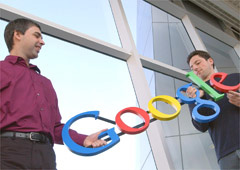
Google Unseats McKinsey in Battle for Human Capital

Every now and then you read an article that stays with you for years. It is usually because a thought in the article was so novel and intriguing that it changed the way you approached an important part of your life. That article for me was written by WSJ journalist Rich Karlgaard in the summer of 2004. In it he detailed an impromptu discussion he had with Bill Gates on a cross country plane flight. Rich details the experience:

"Out of nowhere, (Bill) told me that he had recently figured out who his competition was. It was not Apple, Lotus or IBM. He waited a couple of beats. "It's Goldman Sachs."

"Is this a scoop? Is Microsoft getting into investment banking?"

"No," he said. "I mean the competition for talent. It's all about IQ. You win with IQ. Our only competition for IQ is the top investment banks."

To many this "Battle for IQ" is old news, but at the time this was a big "Aha" moment for me. It made sense. Goldman does not directly compete with Microsoft in software development, but clearly they draw from the same pool of human capital. For years firms like Goldman, McKinsey and Microsoft have managed to attract the best and the brightest, building themselves into veritable brain trusts. However, every now and then a new company comes out of nowhere to attract more of the top notch talent. Below is the results of the latest survey -- courtesy of Universum and Fortune -- that ranks employers by the percentage of MBA students who rank the company in their top 5 most desired places to work (click to enlarge):

Famed consulting shop McKinsey & Company had enjoyed a 12 year reign at the top only to be unseated this year by Google. Yes, Google leads Goldman by almost 50% and is ahead of Microsoft by 300%. So what can we take from this? Well, for starters companies that attract and retain the best and the brightest are winning what may very well be the most important game: the "Battle for IQ." But, perhaps more importantly, in the battle for human capital, no one stays on top forever.

With Inflation Tame, Fed Will Hold Rates

I've been wrong before but I think it is safe to say that at their meeting on May 9th the Federal Open Market Committee (FOMC) will find it in their hearts to hold rates steady at 5.25% for the seventh straight meeting. After the Fed's two day meeting on March 20th-21st rates were left unchanged and the markets threw a party. While I don't expect to see the market react quite so jubilantly this time, I do believe the Fed is in a 'wait and see' mode that probably won't change in the near future.

Ben and the rest of the Fed members are focused on two things right now:

  1. Inflation (ex-inflation): Inflation has been above the Fed's comfort level for quite some time now and the moderation they have predicted has failed to materialize. The "core" price index (sans food and energy, "inflation ex-inflation" in Ritholtz-speak) was up 2.1% in March, compared with 2.4% the month before. Remember the Fed's "comfort level" is 2%, so while 2.1% was a positive development the Fed will likely still call this "elevated." Be that as it may, 2.1% is still cause for minor celebration and took a lot of the mystery out of the Fed decision next week.
  2. Unemployment: Big Ben wants to see unemployment tick up signaling further slowing of the economy. What Ben has gotten thus far is slower growth and lower unemployment. The danger, according to the WSJ, is that "growth in productivity, or output per worker, has slowed. That would mean companies would have to hire more workers for a given increase in sales. If those companies raised wages to attract those workers -- as they have lately -- they would face a choice between raising prices and accepting narrower profit margins." In other words, slowing productivity could lead to . . . you guessed it, inflation! Everyone knows we don't want that, so let us all hope that more Americans were laid off this month so that the unemployment number ticks up to 4.5 or 4.6% when released tomorrow morning (I love jobs, just not when the Fed is worried about productivity!).

Source: "Fed Likely to Stand Pat on Rates"
Author: Greg Ip

Wednesday, May 2, 2007

Froth in Commercial Real Estate

The news media has been intensely focused on the subprime lending crisis ever since some of the largest monoline subprime lenders went belly-up earlier this year. However, years of cheap money and loose lending standards did not only effect the residential real estate market. In many cases commercial real estate lending standards were just as loose as residential lending standards. In a New York Times article this morning Jim Duca (pictured above) of Moody's warned "underwriting has gotten so frothy we have to take a stand."

Jim isn't the first one to cry foul about commercial lending standards. Many were shocked when it was revealed that Blackstone's huge $36 billion Equity Office Property was priced with a sub 5% cap rate. I don't know about you, but locking up such a substantial amount of money at under 5% seems like a waste. In their defense, Blackstone had already lined up the sale of many of those properties at similarly ridiculous valuations and their own IRR calculations were undoubtedly rosier.

Due to structural differences between the residential and commercial markets, it is improbable that the commercial market will unwind as quickly as the subprime residential market. Commercial mortgages never got as exotic as the residential market and the interest only variety typically feature large balloon payments at the end of the term (typically 10 years). Due to these factors fallout may yet be years off. The root of the problem is not complexity of the loans, rather it is underwriters using inflated rent projections in their underwriting decisions and investors letting them get away with it.

For example when Blackstone bought EOP they had already reached a deal with Macklowe properties to sell off 5 midtown Manhattan office buildings in the EOP portfolio. The buildings currently rent for $55-59 a square foot but the projections in the Macklowe pro forma called for rents to increase to over $100 a square foot. Without those rent projections it is unlikely Macklowe could have justified buying the properties for $7.25 billion. Relying too heavily on exponential income increases like those in the Macklowe deal are the surest way to get the attention of guys like Jim Duca at Moody's. As the credit agencies tighten up investors demand higher interest to offset their risk, putting pressure on lenders. Though this will slowly squeeze the spigot of cheap money it may be too late for many who -- like subprime borrowers currently watching their equity fall and mortgage rates rise -- might quickly be underwater when rents moderate and the income isn't enough to cover their encumbrances.

The question is, how much excess has their been and when, if at all, will this effect companies like Credit Suisse, Deutsche Bank and GE?

Tuesday, May 1, 2007

Bancroft Family Is Holding Out

This afternoon Michael Elefante (pictured, right), a Dow Jones board member and representative of the Bancroft Family Trust, announced that the Bancroft family intends to turn down Rupert Murdoch's $5 billion offer for Dow Jones. This was the move that I anticipated. Any good fiduciary would have told the family to hold out for a better offer. It is my personal belief that the family members are surely aware that if they play their cards right they could get a 20-25% premium on the current offer before all is said and done.

Remember, the Bancroft voting shares are not consolidated into 1 or 2 hands. It is estimated that roughly 20 family members control a significant percentage of voting shares. Though they control 65 % of the company, currently shares representing "slightly more than 50% of the outstanding voting power" will vote against the sale. In other words, even at $5 billion the Bancroft family isn't voting all together. If the right price is reached enough family members will agree, and Dow Jones will be sold. This, if anything is encouraging news for News Corp.

The article I read over at Dealbook mentions the potential for a sweetened News Corp. offer. I think they probably will lob another offer up to the plate, I just don't think they will be the only ones.

Will Rupert Murdoch Finally Get Dow Jones?

After a seemingly interminable wait News Corp. finally offered an unsolicited bid for Dow Jones (DJ), the proud owner of the Wall Street Journal, Barron's, Dow Jones Newswires and MarketWatch.com. The bid, which at $60/share represents a 65% premium to DJ's closing price, led some analysts to call it "rich." While $5 billion is no small offer it may not actually be enough to buy DJ.

To be perfectly honest, though this deal has been rumored for years I originally did not have DJ on my short list of potential takeover targets. I left DJ off largely because Rupert Murdoch has been sniffing around DJ for years and never decided to make an offer. The reason? In order to buy Dow Jones one must essentially get the consent of the Bancroft family. The Bancroft family controls between 60 and 65% of the company. They accomplish this through a dual-share structure, Class A common and Class B voting shares. The family controls roughly 15% of the common and 75% of the Class B shares. The company doesn't exercise their influence quietly either. Of the 14 directors on Dow Jones' board 4 have direct ties to the family and it is assumed that a fair share of the other 10 are sympathetic to the family. Family control over the board may partially explain the miserable performance of DJ stock over the past 10 years; before Murdoch's bid DJ still traded 15% below its stock price from 1997.

The Bancroft family will be reluctant sellers and it is likely they will hold out for a bidding war before they agree to a sale. Now that the company is "in play" it should enjoy plenty of suitors. The Times, the Washington Post and Bloomberg are all listed as potential buyers, though I feel the company is ripe to be taken private. With so many private equity firms sitting on billions of dry powder (Carlyle, Goldman, Blackstone etc.) it would seem unlikely that one of them wouldn't take a stab at DJ. I haven't done thorough due diligence but I would imagine, given the company's sloppy acquisition track record and poor leadership, that somewhere in the $1.8 billion of revenue there is some fat to trim and underneath that some unlocked value. Look for news of a competing bid by early next week. If we don't see a bid it will mean Murdoch was further along than we all thought when DJ released it over the wire.

Disclaimer

The content on this site is provided as general information only and should not be taken as investment advice. All site content, including advertisements, shall not be construed as a recommendation to buy or sell any security or financial instrument, or to participate in any particular trading or investment strategy. The ideas expressed on this site are solely the opinions of the author(s) who may or may not have a position in any company or advertiser referenced above. Any action that you take as a result of information, analysis, or advertisement on this site is ultimately your responsibility. Consult your investment adviser before making any investment decisions.