Wednesday, June 11, 2008

Final Post

Today I will be transferring the remaining email subscribers over to the new blog and next week I will be deleting this blog permanently. If you no longer wish to subscribe via email just decline the new invitation. If you do wish to subscribe just confirm your email address and you will continue receiving email updates whenever I post.

Our new blog is located at www.alfredcapitalmanagement.com/blog. Please stop by and say hello!

Thanks,
Ryan

Monday, May 5, 2008

This Blog is Moving

As a part of our website redesign we have incorporated our "Random Walk to Wealth" blog into our new website. You will notice some minor changes - the name of the blog will be Alfred Capital Insights, we are using WordPress rather than Blogger - but the content will be the same.

Later this week I will be shifting this blog's feed to point to our new blog: www.alfredcapitalmanagement.com/blog. If you have any questions about the changes please feel free to contact us directly via our website.

Wednesday, April 30, 2008

Busy Data Week: Case Shiller, GDP, Fed, Employment

Today is the middle of a busy week of economic data.

1. Home Prices: The Case Shiller home price data released on Monday confirmed what many of us have predicted, mainly that the housing market is not showing any signs of stabilization. In fact, the recent trends show an accelerating decline. In the Fed statement released today Bernanke and Co. described the situation as a "deepening housing contraction," hardly comforting words coming from our central bankers. Here in San Diego, home prices are off 24% since their peak:

When you look at the month over month, year to date and year over year numbers you can also tease out some interesting trends. First of all, Charlotte -- the only city posting a year over year in price increases -- is starting to see declines. Second, tract homes in the desert have a hard time holding their value. Just look at Las Vegas and Phoenix over the last 2 months, both are down nearly 10%. Finally, the cities that ran up the most during the upturn are the ones getting hit the hardest now during the downturn. All in all, no surprises here, and certainly no signs of a stabilization:

2. Then we had a dismal consumer confidence report that shows that consumers seem to be well aware of the fragile state of the economy.

I don't put too much weight on the consumer confidence data, but it does give me pause that the people who make up 70% of US GDP and 18% of Global GDP are uncomfortable with their current economic situation.

3. This morning we got the Q1 advance GDP numbers which showed that the economy is still scraping along, helped by stronger than expected inventory numbers and continued growth in net exports. Residential investment still represents an enormous drag (on the order of 1%) on GDP growth and business fixed investment dipped negative for the first time in over a year:


4. Just a few moments ago the Fed decided to lower the Fed Funds Rate and the Discount rate by 25 bps, to 2% and 2.25% respectively. The Fed has moved dramatically this year to address concerns about economic growth. You can see the path of the Fed Funds and Discount Rate in the chart below:


The good news is that the Fed did signal that they have a more balanced approach to its targets of economic growth and price stability going forward. I think it is unlikely that the Fed will aggressively lower rates from where they stand which should put pressure on commodity prices to fall and may further strengthen the nice bottom the dollar is forming.

5. Finally the end of the week is "Labor Market Friday" in which we will get our first glimpse of how weak the employment situation really is. The consensus among economists is for a tick up in the unemployment rate to 5.2% and for the NFP numbers to be negative on the order of 50 or 100 thousand.

Friday, April 25, 2008

Grantham, Recession, Case Shiller, Oh My

1. If you follow the markets and consider yourself a long-term investor, you must read Jeremy Grantham's quarterly newsletters. The most recent one was just posted today, so head on over to www.gmo.com and read it in its entirety. He has some interesting thoughts on the Fed, the Presidential Cycle and Bubbles. He included these great graph de-trended graphs of the S&P 500. Be careful with these graphs though, don't show them to a bull for there is a high likelihood that he/she will laugh in your face and call Grantham a "perma-bear":

2. Is a recession by any other name still a recession?


3. The next round of Case Shiller numbers are due out next week. If February's median price numbers (-5.7% for San Diego single family homes) are any indication, the February Case Shiller numbers aren't going to be pretty. Here are the Case Shiller numbers through January:


The size-adjusted Case Shiller indices reveal a potentially more interesting trend. In San Diego, it is the low end of the market that is bearing the brunt of this real estate bear market. Low Tier homes are off 28% since peak, while high tier homes are only down 14%.


Have a great weekend!

Friday, April 18, 2008

Key Technicals

Thanks to a strong earnings report from Google and some good news out of Citigroup the market rallied today in spite of crude oil rising above $117 for the first time ever. In fact the market broke through some key technical indicators that we have been tracking in the short term:

The Dow closed the day at 12,849.36, well above the 12,750 resistance line we have been watching:

The Nasdaq finished the day at 2,402.97, within 10 points of some minor resistance:


The S&P finished the day at 1,390.33, within 5 points of its resistance:

How the market performs early next week will be very important for the psychology of the market. In fact it is important enough that I am actually writing about this, which should say something because I usually avoid talking about technical analysis on my blog as a matter of principal.

Hat Tip: Bespoke

Wednesday, April 9, 2008

Is Inflation Here to Stay?

Sometimes pictures are better than words:


Hat Tip: WSJ

Monday, April 7, 2008

How to make $3 billion in a Single Year

So you want to make a couple billion dollars in a single year. It turns out it actually isn't that difficult. You just need to follow this 9 step process:

  1. Be Valedictorian of NYU's undergraduate business school (Enrollment: 600 students per class)
  2. Be a Baker Scholar (top 5%) at Harvard Business School (Enrollment: 450 students per class)
  3. Move to Wall Street and become a Managing Director in M&A at a bulge bracket firm (okay, okay it was Bear Stearns but I don't think anyone is reviewing Paulson's resume)
  4. Get bored and leave to start your own merger arbitrage hedge fund. (note: I don't know if Paulson was actually bored or not, maybe he was just greedy)
  5. Build it quietly for a couple of years. (by quietly I mean be enormously successful yet under the radar ie. non-rock star status)
  6. Sniff out the housing decline before anyone else on Wall Street and bet the firm that mortgage backed securities will take a beating.
  7. Have your credit opportunities fund finish 2007 up 303%.
  8. Hire Alan Greenspan as your exclusive (ie. no other hedge funds) advisor.
  9. Get ready to be the first person to ever write a billion dollar check to the federal government (I'd love to check out his tax bill).
All of these steps are much easier of course if your name is John Paulson. Indeed, it is estimated that Paulson made somewhere north of $3 billion in 2007. This is a guy who started the year with about $7 billion of AUM and finished it with $21 billion. As of April he now sits at nearly $30 billion and runs the 7th largest hedge fund in the world, just behind Jim Simons' Renaissance Technologies.

Click here to read a 2003 interview in which Paulson describes his firm, his investment philosophy and his vision for growth. Nowhere does he mention making $3 billion in a single year, but I can't fault him for that. Here's the background on Paulson's incredible year courtesy of Trader Daily:
City: New York
Firm: Paulson & Co.
Age: 52
Estimated Income: $3 billion+

It’s hard to believe that a sitting Treasury Secretary could come to be known as “the other Paulson” in Wall Street circles, but that’s just how large a shadow John Paulson casts these days, with all due respect to the former CEO of Goldman Sachs. In the wake of Paulson’s pulverizing subprime mortgage-backeds short — which, at this point, is thought to have forced God Himself to sell off liquid assets — Paulson suddenly finds himself elevated to a place that transcends a mere cabinet post.

A Queens native, NYU valedictorian, Harvard MBA and former Bear Stearns investment banker who launched his merger-arbitrage hedge fund in 1994 with a few million dollars, Paulson toiled mostly under the radar for many years. We caught wind of him last year as he secured a spot on the Trader Monthly 100 with an estimated 2006 income of $100–$150 million — or, compared to his 2007 haul, cab fare.

Should he ever expect to rid himself of all that dough, Paulson will require several lifetimes. Indeed, the stash he raked in last year will surely be talked about for generations. Betting that the shakiest section of the mortgage market would buckle and then disintegrate, Paulson set out midway through 2006 to take advantage of his hypothesis, setting up limited partnerships on- and offshore, garnering highnet- worth investors, scouring available MBS information, crunching the numbers and ultimately pouncing, shorting the riskiest CDO tranches and wallpapering his offices with credit default swaps. One of Paulson’s funds, Credit Opportunities II, started the year with $130 million and finished it with $3.2 billion.

As the chief steward of credit strategies, Paulson’s partner in subprime shorting, Paolo Pellegrini, was in line to get a significant taste of the history-making score. Early reports indicated that Paulson, whose firm’s assets are now in the neighborhood of $29 billion, profited between $3 billion and $4 billion in 2007. A spokesman for Paulson refused to confirm the figure for us. Paulson himself similarly declined to comment. We’ve since heard that his total take-home was closer to $3 billion, though the smoke is, of course, still clearing. The result, regardless, is still a payday that eclipses anything we’ve ever come across.

Thursday, April 3, 2008

A Per Capita Recession? Japan Growing Faster than the US?

An interesting take on economic growth:

Merrill Lynch North American Chief Economist David Rosenberg points out a simple but overlooked fact about economic growth: The US population is expanding 1.0 - 1.5% per year. Any GDP growth of less than that means that on a per capita basis, we are contracting.

Hence, the per capita Recession already began in Q4 2007, when GDP was 0.6%:

"We are amazed that everyone quibbles about whether real GDP growth will be fractionally positive or negative this quarter. The population is growing in a 1.0-1.5% band annually, so anything less than that on real GDP means that real per capita income is contracting.

That is the way any country’s standard-of-living is determined. And as we saw in the final 4Q revision, real GDP growth may have stayed at +0.6% at an annual rate, but the domestic segments of the economy – strip out foreign trade – actually declined at a 0.4% annual rate. This is roughly the same modestly negative trend in what is referred to as gross domestic purchases that occurred in the first quarter of recession back in 1Q2001 and 3Q1990."

Rosenberg says this means the domestic economy is already in recession.

An interesting comparison to Japan:
A few weeks ago, the Economist noted a similar phenomena about measuring growth globally: Using a per capita measure reveals the changes in a nation's standard of living. If economic growth is slower than population growth, then the living standards in that country are decreasing.

Using a per capita measure works to the benefit of low population growth nations, while using a gross number looks better for faster growing nations:

"Which economy has enjoyed the best economic performance over the past five years: America's or Japan's? Most people will pick America. The popular perception is that America's vibrant economy was sprinting ahead (albeit fuelled by credit and housing bubbles that have now painfully burst), whereas Japan crawled along at a snail's pace. And it is true that America's average annual real GDP growth of 2.9% was much faster than Japan's 2.1%. However, the single best gauge of economic performance is not growth in GDP, but GDP per person, which is a rough guide to average living standards. It tells a completely different story.

GDP growth figures flatter America's relative performance, because its population is rising much faster, by 1% a year, thanks to immigration and a higher birth rate. In contrast, the number of Japanese citizens has been shrinking since 2005. Once you take account of this, Japan's GDP per head increased at an annual rate of 2.1% in the five years to 2007, slightly faster than America's 1.9% and much better than Germany's 1.4%. In other words, contrary to the popular pessimism about Japan's economy, it has actually enjoyed the biggest gain in average income among the big three rich economies. Among all the G7 economies it ranks second only to Britain (see left-hand chart).

Rising PE Ratios in Declining Markets

The Price to Earnings (PE) ratio of the S&P 500 can rise for two reasons:

  1. Price increases outweigh earnings increases.
  2. Declines in earnings outweigh price declines.
I leave you to figure out which one of these two reasons is causing the PE Ratio of the S&P 500 to rise above 20 this week:


Hat Tip: Bespoke

Wednesday, April 2, 2008

Coldplay's Brilliant Web Marketing Strategy

I just got the following email from Coldplay. I am of the belief they are one of the first bands to truly master web marketing. Coldplay is encouraging their fans to download stems of their songs, remix them, upload their remixes onto their website, vote on the uploaded remixes and use a widget to share remixes on their blogs, websites etc. By doing this Coldplay is embracing the internet, embracing their fans and creating loyal followers who will want to support them in the future by attending concerts, buying apparel etc.

The only thing I would have done differently is give away the stems for free, but at only $5.94 and with lots of goodwill built up from their free album this isn't a bad way to monetize their brand.

To celebrate this week's single release (we still have those in England) Radiohead have broken up the song 'Nude' into pieces for you to remix.

For those of you who enjoy this sort of thing, you can buy the separate components or 'stems' (bass, voice, guitar, strings/FX and drums) and remix your own version of the song. You can do this by adding your own beats and instrumentation or just remixing the original parts. More information here: http://www.radioheadremix.com/information/

You can buy the stems here: http://www.radioheadremix.com/buy/You can upload your finished mixes here http://www.radioheadremix.com and be judged and even voted on by 'the public'.

You can also create a widget allowing votes from your own website, Facebook or MySpace page to be sent through too.

Hope you enjoy it

For those of you who aren't that way inclined, Nude is also available in its entirety on CD and 7 inch (UK release) at the usual retail outlets.
The only other really interesting business model in the music space is Live Nation. Live Nation is a billion dollar publicly traded company based in Beverly Hills that was a spinoff of Clear Channel. They produce and promote events, own venues and have recently begun signing major "bear hug" deals with artists like Madonna (10 year and $120 million) and U2 (12 year and est. $100 million) that enables them to profit from merch sales as well as digital and branding rights. Their stock prices is trading about 50% lower than the 52 week high but still looks expensive. Update: Live Nation announced they are in a final round of negotiations with Jay-Z on a $150 million deal.

Credit Crisis League Tables

Introducing the league tables that no one wants to be on the top of:

1) First the credit crisis "Writedown" league table:


All told there has been nearly a quarter of a billion dollars of write-downs and many are predicted this to rise to over $1 trillion over the next few years. Goldman Sachs is predicting $1.2 trillion.

2) Second the credit crisis "Capital Infusion" League Table:

Citi and UBS have been the most aggressive in raising capital and for good reason, they also have the largest losses. The only real shock here is that Merrill hasn't raised more cash.

3) Finally, this is the net effect of the writedowns and capital infusions for many of the large banks:
If this chart is any indication, Citigroup is in for another massive writedown. Some are predicting it will be in the $12-15 billion range, which compared to UBS's recent $19 billion writedown isn't all that shocking. This chart also hints that Merrill Lynch probably isn't done raising outside capital, look for them to take another chunk of money in the near future.

Data: Bloomberg

Thursday, March 27, 2008

Jane Mendillo to Run Harvard's $34.9 Billion Endowment

Harvard Management Company today named Jane Mendillo, CIO to replace the departed Mohamed El-Erian:

After an extensive search, Harvard University has picked Jane Mendillo, chief investment officer for Wellesley College, to run the nation's largest college endowment.

Ms. Mendillo will take over July 1 as president and chief executive officer of Harvard Management Co., the company the runs the $35 billion endowment. She succeeds Mohamed El-Erian, who left last year to return to Pacific Investment Management Co. in Newport Beach, Calif.

During her five years at Wellesley, the school's endowment had an average annualized return of 13.5%, and grew to $1.7 billion from $1 billion. Prior to Wellesley, Ms. Mendillo worked for 15 years at Harvard Management, where she held a number of positions, including vice president of external management.

"Jane Mendillo has an excellent record as one of the most able and accomplished investment managers in the endowment world, as well as an extensive knowledge of the Harvard endowment and a deep commitment to higher education," said James F. Rothenberg, treasurer of Harvard University and chairman of the HMC board of directors.
Hat Tip: WSJ

Friday, March 21, 2008

Hilarious Bear Stearns Video from Jon Stewart


Wow.

Is Hillary Mathematically Eliminated?

The verdict is out, the superdelegates are the only way that Hillary Clinton can still win the Democratic Party's nomination. So, why is the media still portraying this as a neck and neck race? Politico.com may have the answer:

One big fact has largely been lost in the recent coverage of the Democratic presidential race: Hillary Rodham Clinton has virtually no chance of winning.

Her own campaign acknowledges there is no way that she will finish ahead in pledged delegates. That means the only way she wins is if Democratic superdelegates are ready to risk a backlash of historic proportions from the party’s most reliable constituency.

Unless Clinton is able to at least win the primary popular vote — which also would take nothing less than an electoral miracle — and use that achievement to pressure superdelegates, she has only one scenario for victory. An African-American opponent and his backers would be told that, even though he won the contest with voters, the prize is going to someone else.

People who think that scenario is even remotely likely are living on another planet.

As it happens, many people inside Clinton’s campaign live right here on Earth. One important Clinton adviser estimated to Politico privately that she has no more than a 10 percent chance of winning her race against Barack Obama, an appraisal that was echoed by other operatives.

In other words: The notion of the Democratic contest being a dramatic cliffhanger is a game of make-believe.

The real question is why so many people are playing. The answer has more to do with media psychology than with practical politics . . .
Please read on at Politico.com.

Meanwhile over at InTrade it appears that Obama's strength is truly evident, he has a 77.5%-23.3% advantage over Clinton:

Hat Tip: Intrade

Commodities Sag, but Why?

The punishment that financial markets have been doling out recently has finally hit the last bastion of strength: commodities. Most believe that the decline in everything from oil to corn to wheat is the result of investors raising cash:

Investors with losing trades in credit markets -- mortgage bonds or collateralized debt obligations, for example -- are being required by banks and others to set aside more cash to cover the money they borrowed to make trades, a process called "deleveraging." To raise the cash, some investors and hedge funds have sold some of their commodity winners.

"It's a classic deleveraging trade," says Bill O'Neill, a partner at investment-advisory firm Logic Advisors in Upper Saddle River, N.J. He says the unwinding of winning commodity trades has been playing out for most of this week, especially in the first half of the week.
Others give the victory to Bernanke:
Investors who had poured money into gold, oil and corn, seeking a hedge against inflation and a weak dollar, sold commodities to raise cash or buy stocks. The Reuters/Jefferies CRB Index of 19 commodities tumbled 8.3 percent this week, the most since at least 1956, after touching a record on Feb. 29.

``Bernanke took care of the commodity bubble,'' said Ron Goodis, the retail trading director at Equidex Brokerage Group Inc. in Closter, New Jersey. ``Commodities are coming back to earth. The stock market looks OK, and Bernanke is starting to look a little better.''

Concern that the central bank would let inflation get out of control eased after the Fed cut its key interest rate by 0.75 percentage point on March 18, less than the reduction of at least 1 point that investors had expected.

I think there is more to this than de-leveraging and investors respecting Bernanke's inflation-fighting prowess. I believe that investors are beginning to call into question the strength of global growth and sensing that it is simply not credible that India, China, Brazil and other engines of growth around the world will remain oasis' of prosperity when the world's largest economy (though technically smaller than the Euro-zone thanks to the weak dollar) experiences significant financial stress. Remember just 10 years ago Russia defaulted on billions of dollars of debt (remember LTCM) after the Asian crisis led to a global slowdown that pushed oil prices down to $11 a barrel and took away a major source of income for the Kremlin. Now oil prices are 10 times that on the back of one of the longest episodes of global growth on record. There is certainly plenty of room for commodity prices to fall further, especially if we start to see the slowdown in the US spreading more aggressively to the rest of the world.

Hat Tip: WSJ and Bloomberg

Tuesday, March 18, 2008

Fed Cuts by 75 bps to 2.25%

The Fed decided to cut the benchmark Federal Funds Rate 75 bps to 2.25%, not the full 1% that the market expected. I am marginally happy with this cut. I'm glad the Fed didn't do the full 1%. It sounds like they are trying to hold their ground on inflation and not seem too ready to debase the dollar and bail out Wall Street, but they also must realize that they are between a rock and a hard place.

Already the Dow is off over 100 points since the cut was announced, but is still up 200 points on the day. It will be an interesting 100 minutes to the close.

Hat Tip: CNBC Television

Fed Day

The Federal Open Market Committee (FOMC) meets again today for the first time since the end of January. But just because the FOMC hasn't had a formal sit down in 6 weeks doesn't mean the Federal Reserve hasn't been busy. On March 7th the Fed increased the Term Auction Facility (TAF) to $100 billion. On March 11th they announced a new $200 billion Term Securities Lending Facility (TSLF) designed to allow financial institutions to borrow from the Fed using MBS as collateral. Finally on Sunday the Fed agree to provide a $30 billion non-recourse 4 week loan to assist JPM's bailout of Bear Stearns. At the same time the Fed cut the discount rate by 25 basis points to 3.25% and announced a new Prime Dealer Credit Facility (PDCF) to provide overnight funding to prime dealers. All of these "Facilities" serve as extra support for the Fed's main policy action of lowering short term interest rates. They haven't been shy there either, cutting the Fed Funds rate 225 bps since September, including a 75 bps cut on January 22nd that was the largest rate cut in over 2 decades.

In the meantime since August 17, 2007 the dollar has fallen over 13%, the CRB commodity index has risen 32%, the S&P 500 is down nearly 10%, real interest rates are at or near negative and many are starting to realize that a recession may be better than debasing the dollar and stoking inflation even more. Yet, the Fed stands ready to cut the Fed Funds rate another 50-100 bps today.

I for one am worried that the Fed has effectively "run out of ammunition." This is the problem that Bill Gross ruminated about in his last market commentary, which I blogged about back on January 30th:

Because demand in the form of consumption has been artificially and fictitiously stimulated in recent years by financial engineering run amuck, there is a legitimate question as to whether its black hole imploding destructiveness can be totally countered with another dose of lower yields and deficit spending packages.
The economy is acting a bit like a drunken sailor, and unfortunately the Fed thinks the cure is another round of liquidity shots to which the sailor will most likely not respond well.

So what will the Fed do? We will know in 30 minutes and it is all up to these 10 lucky Fed governors:

Hat Tip: WSJ, Ritholtz, Rutledge

Monday, March 17, 2008

JP Buys Bear for $2 Share

A photo of the Bear Stearns building in New York taken this morning:

So what do you think? Did JP get a good deal or did Bear's stockholders get taken?

Hat Tip: CR

Friday, March 14, 2008

And the Bear Goes Down . . .

Perhaps it is fitting that the first major non-bank financial institution to go belly up in the credit crisis is Bear Stearns. After all, the similarities to Drexel Burnham are striking, Bear notoriously refused to help during the LTCM crisis and the symptoms were certainly there. But, while many suspected they were on weak footing, I think most were surprised how swiftly they went under. After all, this is a firm that didn't have a single loss in 83 years going into 2007 and then in two consecutive years posted its first loss and now is getting bailed out. There is no doubt in my mind that we have now entered a new phase of this crisis. The contagion has spread into banks and other financial institutions and the "global margin call" will most likely continue as all institutions brace themselves from counterparty risk by de-leveraging and raising as much cash as possible. As much as I dislike continuously discovering that Nouriel Roubini has been correct, he once again has pegged the next leg of this meltdown.

Usually in times like these we can rely on a few market sages to come out with some words of comfort. Typically the rallying call is that the US is a large and resilient economy with an educated, mobile labor force with a commanding position atop the world economy, yada yada yada. But today the people I respect the most are largely fearful.

1) My former professor Martin Feldstein:
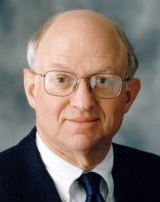
Harvard University economist Martin Feldstein said a six-year U.S. economic expansion has ended and the downturn could be substantially worse than past contractions.

``I believe the U.S. economy is now in recession,'' Feldstein, president of the National Bureau of Economic Research, said in a speech at the Futures Industry Association conference in Boca Raton, Florida. ``The situation is bad, it's getting worse and the risks are that the situation could be very bad.''

Feldstein is a member of the NBER's business-cycle dating committee, a group of economists that marks the beginning and end of expansions and recessions. It could be months before the group officially declares when, if at all, a recession has started, committee members say.

Answering questions from the audience, Feldstein said the downturn could be the worst in the United States since World War Two. Feldstein said the federal funds rate, the Federal Reserve's benchmark lending rate, is headed down to 2 percent from the current 3 percent. He added that lower rates from the Fed would not have the same impact in the current downturn, in terms of reviving economic activity.
"There isn't much traction in monetary policy these days, I'm afraid, because of a lack of liquidity in the credit markets," he said.

Hat Tip: Guardian, Bloomberg

2) Former Treasury Secretary Robert Rubin
:
Former Treasury Secretary Robert Rubin said on Friday that the current U.S. mortgage crisis demands fresh action to stabilize the market.

"I believe the risks are serious enough to call for substantial additional action in the mortgage area, assuming that measures can be adopted that, when the pros and cons are weighed out, are on balance sensible," Rubin told a conference at the Brookings Institution.

"With respect to economic risk ... I have been around financial markets for a long, long time and I believe that we are in somewhat uncharted waters," Rubin said.

While the current crisis might pass "without inflicting significant additional damage on the economy," the risks are great enough for him to call for action.
Hat Tip: Reuters

3) Former Treasury Secretary and Former Harvard President Larry Summers:
"We are in nearly unprecedented times with respect to the financial strains."
"I believe that we are facing the most serious combination of macroeconomic and financial stresses that the United States has faced in at least a generation and possibly much longer than that."
Summers, March 7, 2008 at Stanford. Here's the video of the speech.

Hat Tip: CR and Tanta

4) Jeremy Grantham:

Barron's: You, along with George Soros, have called this the worst financial crisis we've had in the post-war era.

Grantham: This is much more global than, say, the savings-and-loan crisis was. The world is obviously much more globalized than at any time since the late 19th century and much more interrelated in almost every way, certainly financially. To have the leading economy and the reserve currency having a major-league credit crisis would by itself make it more important than earlier ones.

Secondly, this occurred at a time of what I believe is the first global bubble in pretty well all asset prices, so there is a much greater degree of broad-based vulnerability. Then it is a question of degree, and how carried away the sloppy lending was: It was very carried away. Not just in the design of needlessly complicated instruments, but in the enthusiasm—recklessness one might say—with which they were sold.

Barron's: What about places to hide?

Grantham: That isn't something we can laugh off. Last time, there were plenty of opportunities: Bonds were cheap and TIPS (Treasury-inflation protective securities) were brilliant; real estate was cheap and REITs were brilliant. Even within equities, emerging markets were much cheaper than U.S. equities, and within U.S. equities, value stocks were only a little expensive and small-caps were only a little expensive and small-cap value was actually a little bit cheap. So you could really hide and could reasonably expect to make money, which we did in each of the three years of the bear market.

Since then, all those areas appear to have read the book on mean-reversion. Ten years would be a perfectly normal period of time to go from a peak of a great bubble [like the one in 2000], based on the history of bubbles and their aftermath, to the low. I have long thought that 2010 would be when we hit the biggest discount to fair value. Trend-line value on the S&P, by the way, in 2010 is 1100. (The S&P 500 traded at 1334 late last week.)

Hat Tip: Barron's

Thursday, March 13, 2008

New Records are Not Good

This year has been a year of records. Here are some of the benchmarks we have hit in the three short months of 2008.

1) Gold rises above $1,000 an ounce:

Most-active April gold futures reached a new high of $1,001.50 on the Comex division on the New York Mercantile Exchange Thursday.

The metal has climbed steadily since 2001 after falling as far as $250s a number of times during the period from 1999 to 2001.

The several-year bull market accelerated rapidly since August after the Federal Reserve signaled it was easing monetary policy to shore up the economy amid worries about the credit markets due to sub-prime problems. In fact, to hit $1,000, April gold futures soared 50% since the Aug. 16 low of $666.40.

Hat Tip: WSJ

2) Oil first rises above $100, and now sits at a record $111:
Crude oil for April delivery rose more than $1 to hit $111 a barrel on the New York Mercantile Exchange in mid-morning trading. It was last up 85 cents, or 0.8%, to $110.77 a barrel. Crude has gained nearly $6 since Monday.

Crude prices, denominated in dollars, tend to rise when the greenback falls, as a weaker U.S. currency makes crude less expensive to buyers holding other currencies. It also eats into oil producers' dollar revenue and forces them to raise prices. The weak dollar is also pushing up prices of other commodities.
Hat Tip: Marketwatch

3) The Dollar falls to record lows against the Euro.

The euro has been on an upward trajectory since late 2001, but its rally has intensified since the credit crisis shocked financial markets last August and aggressive U.S. interest rate cuts sent dollar to record lows.

The latest, some say third, wave of the credit crunch in recent weeks has seen the dollar's broad decline accelerate and on Thursday the euro surged to records above $1.56 and the dollar broke to 12-year lows under 100 Japanese yen.

Policymaker protests are well underway.
Hat Tip: Guardian, Bespoke

4) The Dollar falls below ¥100 for the first time since 1995:

``Dollar-yen is going lower,'' said Ray Farris, head of foreign-exchange strategy at Credit Suisse in London. ``It will definitely overshoot our 98 forecast in the very near term. Our forecast was for the dollar to reach 98 in three months. The big question now is whether there will be intervention.''

Japanese officials are unlikely to intervene now in the foreign-exchange market because the yen is ``cheap'' compared with other currencies, Sakakibara said. The U.S. and Japan may intervene to weaken the yen should it break through 90 and head toward 80 per dollar, he said.

The yen's real effective exchange rate, measured against 15 currencies of major trading partners including China, Europe and Canada, is 99.5, according to Bank of Japan figures. The rate averaged 121.9 in the first quarter of 2004, when the bank last intervened on behalf of the Ministry of Finance.

Hat Tip: Bloomberg

5) Carlyle Capital becomes the next hedge fund implosion:

The credit crisis has claimed another victim.

Carlyle Capital Corp. said late Wednesday it expects its lenders will seize its assets, causing the likely liquidation of the fund, which until recently owned $21.7 billion in mortgage securities.

"Although it has been working diligently with its lenders, the Company has not been able to reach a mutually beneficial agreement to stabilize its financing," the fund said in a statement.
Hat Tip: WSJ

Monday, March 10, 2008

What Happens When Everyone gets a Margin Call at the Same Time?

Paul Krugman had a great op-ed piece today in the NYT appropriately named the "Face-Slap Theory." Here's a taste:

One consequence of the crisis is that while the Fed has been cutting the interest rate it controls — the so-called Fed funds rate — the rates that matter most directly to the economy, including rates on mortgages and corporate bonds, have been rising. And that’s sure to worsen the economic downturn.

What’s going on? Mr. Geithner described a vicious circle in which banks and other market players who took on too much risk are all trying to get out of unsafe investments at the same time, causing “significant collateral damage to market functioning.”

A report released last Friday by JPMorgan Chase was even blunter. It described what’s happening as a “systemic margin call,” in which the whole financial system is facing demands to come up with cash it doesn’t have. (A financial joke making the rounds, via the blog Calculated Risk: “Who is this guy Margin that keeps calling me?”)
You'll have to check out the article for yourself to read on.

Wednesday, March 5, 2008

Historical Corrections

Every now and then Bespoke Investment Group puts together a graph that really helps put current market events in historical perspective. The graph below is such a graph. It shows all market corrections in the S&P 500 dating back to 1927. You can see that this current correction is already longer than the typical correction, though it isn't as deep:


There have only been 4 corrections that have lasted longer than a year and roughly 6 that have led to declines over 35%. One final note, this current "correction" will only turn into a "bear market" if the S&P 500 falls below 1260.87, which is roughly 6% below the current level of the market.

Hat Tip: Bespoke

Monday, March 3, 2008

Sunday, March 2, 2008

Obama, Medvedev, iPhone, TrimTabs

Here is the week in Preview:

1. Will Barack punch his ticket on this second version of "Super Tuesday" in which Texas, Ohio, Vermont and Rhode Island hit the polls? Barack and Clinton square off in what should be the deciding battle of the race for the Democratic candidacy.

If Barack Obama defeats Hillary Clinton in Texas or Ohio tomorrow, he will take control of a unified Democratic Party and enter the race against John McCain with an already-established reputation as a political giant- killer.
Hat Tip: Bloomberg

2. Putin's hand-picked successor Dmitry Medvedev wins the election:
Dmitry Medvedev won Russia's presidential election, giving him a mandate to succeed Vladimir Putin. Russian monitors complained of election-law violations. Medvedev had 70.2 percent of the vote with 98.1 percent of returns counted at 7:30 a.m. in Moscow today, according to the Central Election Commission. The Commission will announce the result at 10 a.m.

Medvedev, 42, became the favorite after Putin named him as his chosen successor on Dec. 10. Putin then enjoyed approval ratings of more than 80 percent. A week later, Putin agreed to serve as Medvedev's prime minister, keeping a pledge to retain influence and setting the stage for a dual leadership that's unprecedented in modern Russian history.

Hat Tip: Bloomberg

3. Is Apple opening up the iPhone on Thursday?
Apple has invited the media to an event Thursday at the company's Cupertino, Calif., headquarters, where it plans to present an "iPhone software roadmap." One of the event's highlights will be a software-development kit that will let independent programmers build iPhone applications, according to Apple's invitation.
Hat Tip: WSJ

4. Labor Market Friday - The first Friday of the month should give us a taste of how many jobs we gained in February. But, thanks to Barry Ritholtz we've learned to not trust these numbers. After all the NFP data did overstate job growth by 14.4% in 2007. The more accurate data point is probably from TrimTabs:
TRIMTABS, which estimates employment growth using data from an online job index and an analysis of income tax withheld versus job creation rates, has been far more accurate than the Bureau of Labor Statistics. For example, in 2006, the government’s initial estimates of employment growth came in at 1.52 million jobs. But the bureau revised that data upward in February 2007, for a total of 2.24 million.
By comparison, TrimTabs’ estimates of 2006 employment growth, using real-time data, totaled 2.39 million jobs. The firm reported those figures to clients contemporaneously.

Last week, TrimTabs told clients it estimated that 77,000 jobs would be lost in February; Wall Street economists are calling for a gain of 30,000 for the month.

Since October 2007, TrimTabs estimates, the economy has lost about 175,000 jobs, the first sustained employment drop since early 2003.
Hat Tip: CR

Goldman's Call: CRE is Next

I have been speculating for some time that commercial real estate might be the next US asset class to take a hit. In fact I first wrote about this issue in May of 2007 in a post titled "Froth in Commercial Real Estate." We've been seeing turmoil in that marketplace for quite some time, but it looks like 2008 might be the first major leg down. Obviously any pronounced downturn will hurt businesses and commercial real estate. But, the longer and more pronounced the recession, the worse CRE could get.


Of all the Wall Street firms, Goldman has been perhaps the best at identifying major structural issues in the US economy over the past 2 years. They hedged against subprime better than any other firm, they have been correctly bullish on agricultural commodities, they saw the major bank writedowns coming and now they are calling for a major (20%+) CRE correction.

You can read the full article here. Or you can just read this ubiq-cerpt:

After suffering a beating from their exposure to home loans, banks and securities firms are about to take their lumps from office towers, hotels and other commercial real estate. And the losses could last longer than those from the subprime shakeout.

As the economy wobbles and financing costs rise because of the credit crunch, commercial-real-estate values are starting to slide, with analysts at Goldman Sachs Group Inc. projecting a decline of 21% to 26% in the next two years. That means misery for securities firms with exposure to commercial-real-estate loans and commercial- mortgage-backed securities.

William Tanona, a Goldman analyst, expects total write-downs of $7.2 billion by Bear Stearns Cos., Citigroup Inc., J.P. Morgan Chase & Co., Lehman Brothers Holdings Inc., Merrill Lynch & Co. and Morgan Stanley in the first quarter. Those firms had combined commercial-real-estate exposure of $141 billion at the end of the fourth quarter.

Goldman analysts predicts the financial damage from commercial real estate could last as long as two years, which would mean "a significantly longer tail than subprime." That is because only 28% of commercial-real-estate loans have been packaged into securities since 1995, while about 80% of subprime loans have been securitized; the higher level of securitization subjects the subprime assets to more-immediate mark-to-market accounting, which is playing out in the form of the write-downs that are dominating headlines.

I hate to say this, but I hope Goldman is wrong about the long tail effects of the CRE slodown. Hopefully the decline will be swift so that we can start putting this major real estate asset bubble behind us. For more on this issue check out this CNBC video.

In one final note I want to draw attention to the Markit CMBX indices. The particular index of note is the one that I first posted about back in July of 2008. At that point the CMBXNA-BB 3 index had a spread of 600 bps. As of today that same index has a spread of nearly 2000 bps:
Hat Tip: WSJ

Friday, February 29, 2008

Warren Buffett's Annual Shareholder Letter

It's that time of the year again. Warren Buffett released his annual letter to shareholders. I encourage everyone to go read it here.

Here are my favorite quotes in no particular order.

1. Buffett is great at managing shareholder expectations:

It’s a certainty that insurance-industry profit margins, including ours, will fall significantly in 2008. Prices are down, and exposures inexorably rise. Even if the U.S. has its third consecutive catastrophe-light year, industry profit margins will probably shrink by four percentage points or so. If the winds roar or the earth trembles, results could be far worse. So be prepared for lower insurance earnings during the next few years. (Page 3)

Berkshire’s past record can’t be duplicated or even approached. Our base of assets and earnings is now far too large for us to make outsized gains in the future. (Page 4)
2. Buffett's ability to buy a company quickly and with cash makes him the acquirer of choice:
This deal was done in the way Jay would have liked. We arrived at a price using only Marmon’s financial statements, employing no advisors and engaging in no nit-picking. I knew that the business would be exactly as the Pritzkers represented, and they knew that we would close on the dot, however chaotic financial markets might be. During the past year, many large deals have been renegotiated or killed entirely. With the Pritzkers, as with Berkshire, a deal is a deal.
I think this is hilarious because what Warren calls "nit-picking" most people would just call "due diligence."

3. Buffett consistently praises his CEO's and recognizes the competitive advantage they give him:
A second, somewhat related, point about these managers is that they have exactly the job they want for the rest of their working years. At almost any other company, key managers below the top aspire to keep climbing the pyramid. For them, the subsidiary or division they manage today is a way station – or so they hope. Indeed, if they are in their present positions five years from now, they may well feel like failures.

Conversely, our CEOs’ scorecards for success are not whether they obtain my job but instead are the long-term performances of their businesses. Their decisions flow from a here-today, here-forever mindset. I think our rare and hard-to-replicate managerial structure gives Berkshire a real advantage.
4. Buffett's "simple" investment philosophy:
Charlie and I look for companies that have a) a business we understand; b) favorable long-term economics; c) able and trustworthy management; and d) a sensible price tag. We like to buy the whole business or, if management is our partner, at least 80%. When control-type purchases of quality aren’t available, though, we are also happy to simply buy small portions of great businesses by way of stock market purchases. It’s better to have a part interest in the Hope Diamond than to own all of a rhinestone.

A truly great business must have an enduring “moat” that protects excellent returns on invested capital. The dynamics of capitalism guarantee that competitors will repeatedly assault any business “castle” that is earning high returns. Therefore a formidable barrier such as a company’s being the lowcost producer (GEICO, Costco) or possessing a powerful world-wide brand (Coca-Cola, Gillette, American Express) is essential for sustained success. Business history is filled with “Roman Candles,” companies whose moats proved illusory and were soon crossed.
5. The first time Buffett ever agreed to increase his offer for a company:
We agreed to purchase 35,464,337 shares of MidAmerican at $35.05 per share in 1999, a year in which its per-share earnings were $2.59. Why the odd figure of $35.05? I originally decided the business was worth $35.00 per share to Berkshire. Now, I’m a “one-price” guy (remember See’s?) and for several days the investment bankers representing MidAmerican had no luck in getting me to increase Berkshire’s offer. But, finally, they caught me in a moment of weakness, and I caved, telling them I would go to $35.05. With that, I explained, they could tell their client they had wrung the last nickel out of me. At the time, it hurt.
6. Buffett isn't joking when he says he likes to buy enduring franchises with strong brands:
In 2007, American Express, Coca-Cola and Procter & Gamble, three of our four largest holdings, increased per-share earnings by 12%, 14% and 14%. The fourth, Wells Fargo, had a small decline in earnings because of the popping of the real estate bubble. Nevertheless, I believe its intrinsic value increased, even if only by a minor amount.

In the strange world department, note that American Express and Wells Fargo were both organized by Henry Wells and William Fargo, Amex in 1850 and Wells in 1852. P&G and Coke began business in 1837 and 1886 respectively. Start-ups are not our game.
Note that this quote contrasts with Buffett's early comments regarding Lebron James:
"If Lebron were an IPO, I'd buy it." - Buffett
7. Would Buffett buy Google stock? Well, its probably not seasoned enough, but he does like the cash flow:
A company that needs large increases in capital to engender its growth may well prove to be a satisfactory investment. There is, to follow through on our example, nothing shabby about earning $82 million pre-tax on $400 million of net tangible assets. But that equation for the owner is vastly different from the See’s situation. It’s far better to have an ever-increasing stream of earnings with virtually no major capital requirements. Ask Microsoft or Google.
8. Buffett on sovereign wealth funds:
There’s been much talk recently of sovereign wealth funds and how they are buying large pieces of American businesses. This is our doing, not some nefarious plot by foreign governments. Our trade equation guarantees massive foreign investment in the U.S. When we force-feed $2 billion daily to the rest of the world, they must invest in something here. Why should we complain when they choose stocks over bonds?
9. Buffett is bullish on America:
At Berkshire, we will attempt to further increase our stream of direct and indirect foreign earnings. Even if we are successful, however, our assets and earnings will always be concentrated in the U.S. Despite our country’s many imperfections and unrelenting problems of one sort or another, America’s rule of law, market-responsive economic system, and belief in meritocracy are almost certain to produce evergrowing prosperity for its citizens.
10. Quotes:

Wells Fargo CEO John Stumpf on the Banking Industry- “It is interesting that the industry has invented new ways to lose money when the old ways seemed to work just fine.”

Mitt Romney asked his wife, Ann, "When we were young, did you ever in your wildest dreams think I might be president?" To which she replied, "Honey, you weren't in my wildest dreams."

Former Senator Alan Simpson: "Those who travel the high road in Washington need to fear heavy traffic."

Barry's Imaginary Fed Statement

Opening statement of the FOMC Chair, Senate Testimony
February 27, 2008:

Senators, we find ourselves in a very challenging situation.

Following the dot com implosion, my predecessor at the Fed slashed rates to a generational low of 1%; the FOMC then kept rates at 1% for over a year.

While that re-inflated the economy, it also set off a shock wave of inflation unseen since the 1970s. Houses doubled in price, Oil is up 5 fold, food stuffs have tripled, and the dollar has collapsed. Gold is at multi-decade highs.

As always happens, these price increases in hard assets attracted speculators, and that made the situation -- especially in housing -- much more complex. Even worse, the housing speculation contributed to a debacle, while these other assets are actually accelerating in price.

Further, as was the political fashion, deregulation and a lack of interest in the oversight role of the banking system allowed an unprecedented expansion of credit, including to the least credit worthy consumers. Additionally, derivative selling -- at is heart, an unregulated form of insurance -- expanded from a few billion dollars to $46 trillion dollars.

The credit crunch is unprecedented, far worse than the S&L collapse and Long Term Capital Management -- combined.

All of these factors have combined to create our present situation. Inflation remains very elevated and worse, quite sticky. Growth continues to slide towards zero -- and possibly beyond.

Like many others, our forecasts in these areas have been wrong. We expected the slowing economy to moderate inflation, and so far, that has not happened. Demand for commodities from China and India is keeping prices elevated. The weakening dollar -- now at levels last seen in the 1960s -- is forcing all dollar denominated commodities higher. I don't necessarily believe in "Peak Oil," but the fact that the Saudis are one of the world's biggest investors in alternative energy research might tell you something.

The last time a slowing economy failed to moderate prices was the 1970s. Even as the economy slid into recession, we had major spikes in the prices of energy, food, clothing.

What is particularly worrisome to me is that as we have slashed interest rates 225 basis points, consumer loans -- mortgages and revolving credit -- have actually moved higher.

Gentleman, this is a major problem. And our internal, non-public projections forecast it is only going to get worse for the next 4 quarters . . .

I think we can all agree that Barry imaginary central banker would make a horrible Fed Chairman, he's just too honest. I think even the worst central banker have been given basic training on words to avoid, among which "implosion" is probably up near the top next to "explosion", "meltdown"and "contagion." But, Barry makes his point: in public conversations the Fed Chairman must sugar-coat everything in order to maintain confidence in the US financial system.

That being said I think that increasing concern over the Fed's "independence" is warranted. There is no reason for the largest economy in the world to fear the lower part of the business cycle. Most sane economists agree that recessions are a healthy and necessary part of longer term economic growth. When faced with a recession, the policy of devaluing the currency and fueling inflation is not a sound long-term strategy for the United States. Bernanke is risking a repeat of the 1970's stagflation nightmare. From everything we've learned, inflation is a pernicious, resilient foe. It seeps in and is tough to fight back. Let us hope that Bernanke doesn't forget about inflation this year. But, in the meantime lets buy all the non-dollar denominated real assets we can get our hands on -- asian currencies, agricultural commodities, base metals and emerging market materials stocks.

Disclaimer

The content on this site is provided as general information only and should not be taken as investment advice. All site content, including advertisements, shall not be construed as a recommendation to buy or sell any security or financial instrument, or to participate in any particular trading or investment strategy. The ideas expressed on this site are solely the opinions of the author(s) who may or may not have a position in any company or advertiser referenced above. Any action that you take as a result of information, analysis, or advertisement on this site is ultimately your responsibility. Consult your investment adviser before making any investment decisions.