Showing posts with label Alternative Investments. Show all posts

Monday, July 9, 2007

Clean Energy and Water

Two ETF offerings from PowerShares -- PBW and PHO -- have been core parts of the commodity allocation of our portfolios over the past 12 months and have performed very well.

We started buying the Powershares WilderHill Clean Energy ETF (PBW) around this time last year when the fund was trading in the 17's. At the time the fund had retreated almost 40% from its high on the year. It is up 28% so far YTD and we continue to feel that it is still well positioned to take advantage of investor interest in clean energy technology. It has accumulated roughly $900 million of investor money.

We started buying the Powershares Water Resources ETF (PHO) in 2006 as well, accumulating when PHO was trading under $19. The fund is up almost 16% YTD and has accumulated $1.54 billion of assets.

We still like PHO but we are currently analyzing a new Powershares ETF called the Global Water Portfolio (PIO). The fund just launched and only has $47.79MM of assets but due to its global slant it may be more attractive in the long run than PHO. The two ETF's are actually very similar and share 13 of the same holdings, which is about a third of each fund. (Shared holdings are highlighted, click to enlarge.)

The main advantage of PIO is that it offers broader international exposure. It has holding in Japan, the UK, Singapore, Canada, China, Austria, Germany, France and Finland as seen below:
I wouldn't be surprised that if PIO attracts enough assets it will show up in our portfolios sometime later this year. We have also looked at the Claymore Global Water ETF (CGW) and the First Trust ISE Water Index ETF (FIW).

Friday, June 22, 2007

Blackstone Up, Fortress Down

Blackstone IPO'd today under the ticker symbol BX and was rewarded with a 13% gain on its first day in the market in spite of market forces heading the opposite direction. Investors seemed to shrug off the new tax proposal announced by Congressional leaders that could double the tax on carried interest. All in all the IPO was a success and Stephen Schwarzmann and Pete Peterson both made out handsomely.


An interesting sidenote to today's action was that Fortress Investment Group (FIG) had a terrible day. After opening 2.5% above yesterday's close the stock sagged in mid-morning trading before closing down 6.3% on the day. FIG is now trading close to the level it was at last week when I recommended it. In my mind nothing has really changed, this might just represent a second buying opportunity for FIG at a great price.

Friday, June 15, 2007

The Private Equity Tax Battle Rages On

On the eve of Blackstone's planned IPO a proposed private equity tax law could throw a wrench in CEO Stephen Schwarzman's plans. Private equity firms make their money via an asset based fee and a performance fee. This is typically* expressed as "2-and-20": the 2% fee is on all assets under management and is taxed at ordinary income rates up to 35% and the 20% is a cut of the firm's profits and is taxed at the 15% capital gains rate.

Under pressure to combat increased income inequality and increase tax revenue, Federal lawmakers had been tossing around the idea of raising taxes on private equity firms by re-characterizing "carried interest" as ordinary income. It appears that they have curbed that discussion for now.

However, since Fortress and Blackstone would both be publicly traded partnerships, Congress, led by Charles Grassley and Max Baucus (pictured above), could overturn a 20 year old tax law that taxes publicly traded partnerships at 15%. Instead these publicly traded private equity firms would be taxed at corporate rates of up to 35%. This won't effect private equity firms who stay private but it will certainly influence whether or not they choose to go public.

If such a bill were to pass Congress and avoid a presidential veto it would certainly dampen the valuations private equity firms have been receiving and create massive disincentives to going public. The law, were it to pass, would grandfather in Fortress and Blackstone for a period of 5 years.

Fortress Investment Group (FIG) was off 6.5% today on the news and is off nearly 30% since late March. I think investors may be overly pessimistic on FIG because of this bill. FIG's effective tax rate today is already somewhere near 25% and much of their income is not tax-advantaged. If, as I expect, this bill doesn't pass this might be a great time to pick up a few shares of FIG on sale. Heck even if the bill does pass, FIG is safe for 5 years and even with conservative growth projections and higher taxes, buying FIG at $23.50 with a PE of 21.5 is a steal.


* Some firms charge more, some less.

Go to Article from Marketwatch >>
Go to Article from DealBook >>
Go to Article from Bloomberg >>

Wednesday, June 13, 2007

Subprime Isn't Done Yet Folks

Yesterday a hedge fund managed by Bear Stearns announced their intention to sell $4 billion of mortgage backed bonds. The fund -- the High-Grade Structured Credit Strategies Enhanced Leverage Fund -- has been hurt by their exposure to the subprime sector and is allegedly down almost 25% this year. One way to track the damage in the subprime sector is to monitor the ABX Home Equity BBB Index. Here is some quick background on the ABX index courtesy of Nouriel Roubini's Blog:

“One way to measure the effects of problems in the sub-prime mortgage sector is to look at Credit Default Swaps (CDS). Remember that these CDS contracts effectively work as a kind of insurance policy for banks or other holders of bad mortgages. If the mortgage goes bad, then the seller of the CDS must pay the bank for the lost mortgage payments (alternatively ... if the mortgage stays good then the seller makes a lot of money).

The index that measures the CDS market for home equity is called the ABX.HE index. The sub-variation of this index that refers to risky sub-prime loans is called the ABX.HE BBB index.

I just checked the ABX.HE BBB index. It has dropped by about 5-7% since July of 2006. This is a substantial drop! Notably, there was a major plummet of the index starting in Dec 2006 when some of the dealers in risky mortgages started going belly up.

So what does this mean? It means that someone out there is now having to cough up the losses in the bad loans. It could be hedge funds, or maybe overseas lenders. But someone is starting to see some losses happening on their balance sheets, and the problem is going to grow significantly in 2007.”
Keep in mind Roubini had this on his blog back on January 11th, 2007. Back then the ABX Home Equity Index had fallen from 101 to 93 in 6 months, which at the time surely seemed like a "substantial drop." Since then the index has fallen precipitously. It now trades in the low 60's and looks ready to re-test its February lows. See graph below courtesy of Markit:


So who is paying for these bad loans? Well in this case its the investors in Bear's fund and perhaps the banks who helped Bear lever up 10 to 1 . . . it makes you wonder who is next.

Monday, June 11, 2007

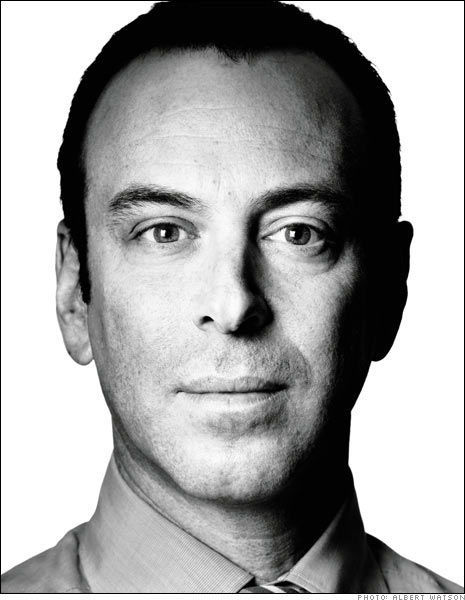
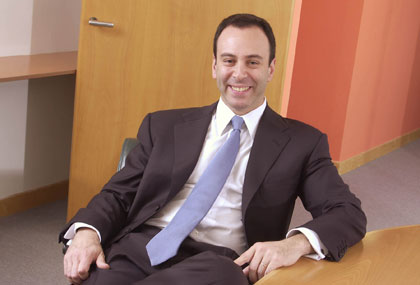
Eddie Lampert Wants Your Money

I have blogged many times about Eddie Lampert. First bragging about his income and again showing off his beautiful Connecticut home. Today I have news of a different variety; I learned that Eddie Lampert's ESL Investments is hoping to raise $3 - 5 billion USD in new investment capital. Due to Lampert's concentrated investment style in which he takes large stakes in a few companies he has placed a long holding period on the capital. There will be two successive 5 year lock-ups with one opportunity to withdraw. The minimum investment is set at $25 million. I would encourage any of my readers who have $25 million investable lying around to take Eddie up on the opportunity. Very rarely is there an opportunity to invest with a top notch manager with such a long track record of 25%+ returns. Frankly though I am a little surprised he set the investment minimum so low, if he truly wanted patient capital he could easily have set a floor of $100 million, making the investment off-limits to all but institutions, endowments, central banks and the wealthiest of families.

Interestingly Eddie has hired Goldman Sachs to help raise the money. Seeing as he probably wants nothing to do with marketing I think that this is a smart move, though probably unneccesary. I understand why Eddie turned to Goldman; they just raised $20 billion for their buyout fund and have no problem raising large sums of money fast. But, I really don't think the problem will be raising the money I think the problem will be stemming the flow of investors who want in.

I can think of two big investors who may want in right off the top: China and Goldman itself. It was back in mid-May that I heard China was buying a pre-IPO stake in Blackstone worth some $3 billion. An investment of a few billion in ESL would seem like a logical second big move for China to diversify their foreign currency reserves and invest with one of the top hedge fund managers. After all what is $2 billion to China, a couple of days of currency reserves? It also makes sense that Goldman itself will probably take a stake. Trading and principal investments make up a full two thirds of their revenue and they are always looking for additional ways to put their capital to work. After all if they are willing to dump millions into RadioShack even after its stellar Q1 performance. Perhaps they are just caught up in the success of Radio Shack CEO Julian Day, an Eddie Lampert hire who helped bring Kmart/Sears out of bankruptcy.

The most exciting part of this development for me is that I think that Lampert probably has a couple of ideas in the works and is looking for a little bit (cough) more capital so that he can complete them on his own. I am a huge fan of ESL and am intrigued to see what his next move is. For those of us who don't have $25 million to invest you can always pony up the $176 for a share of Sears Holdings. It isn't ESL, but its as close as you are going to get. With over $2 billion of cash on their balance sheet I'm sure Eddie will find a way to make some money with Sears.

Wednesday, June 6, 2007

Will Banks Cool Private Equity Boom?

Just a week ago I wrote about how many key private equity players were worried about a bubble. The New York Times reported this morning that several banks were cooling on lending to private equity firms to fund buyouts. RBS admitted there are signs that the market is "quite toppish." Mezzanine lender Intermediate Capital also warned that deals were becoming more risky. The warning from Intermediate Capital is not good news considering the fact that they may well be the largest lender to private equity firms. Of course when you are talking about billion dollar deals, banks don't work alone. Usually banks form large syndicates in order to spread the risk around. Be that as it may, as more and more banks become more careful with the risk they take on, they may well pull the punch bowl from the party. I have a feeling that until their is a dramatic default the boom still has some legs.

In the past week investors have punished Merrill Lynch for its role in providing bridge loans for large private equity deals, like the $32 billion deal for First Data. While I am prone to worry about the potential for a deal to blow-up an leave banks and investors up a creek, some, including Dana Cimilluca at the WSJ think that all the words of caution from private equity players and banks alike may actually be a good sign for the M&A boom to continue:

"As we see it, the Merrill scare is a brick in the wall of worry the private-equity industry seems to be facing these days. One executive after another — many of them participants in the buyout boom — is sounding alarm bells about a bubble. The latest is Royal Bank of Scotland CEO Fred Goodwin, who says the private equity market is getting "quite toppish". His comments echo remarks recently from Bank of America chief Ken Lewis. Moody’s Investors Service in a note today questions whether a march upward in long term interest rates could slow the debt issuance behind the buyout and stock repurchase booms. (It doesn’t think so.)

What does this all mean for the big question everyone is asking — how much longer the good times in the deal world will last? Investment types often refer to a chorus of caution as a bullish sign, in part because it keeps investor behavior from becoming too irresponsible. If that’s the case, it could perversely mean the M&A frenzy still has some legs."

While Dana thinks the caution is a good sign, I disagree. As private equity firms and lenders start to wise up to the risks, the cost of debt rises and many of these deals start to crumble. If one major deal falls through it could send an ice cold tremor through the market putting in peril all the other deals that are in the pipeline and crushing the holders of bridge loans that were hoping that their debt would quickly be replaced with junk.

There is one concrete graph to look at that may point to why banks are starting to sour on the deals presented to them. I wrote about this last week as well. That is the rise in the yield of the 10-year treasury. Just last week the yield curve normalized and the 10-year yield is now moving aggressively towards 5% (see graph below/ click to enlarge).


**One last note. Insofar as the rise in the markets this year has been fueled by all the M&A activity, if lending tightens up and the deals slow down the market may well correct sharply. In fact a major credit event could finally restore the volatility to markets that many have been calling for.

Tuesday, May 29, 2007

Amid Flurry of Deals, Signs of a Top

Today a multitude of deals came to light after the holiday weekend:

  1. Tishman and Lehman are buying Archstone-Smith for $12 billion.
  2. Avaya is selling off pieces to private equity firms.
  3. Madison Dearborn is in talks to buy CDW for over $6 billion.
  4. URS agreed buy the Washington Group for $2.6 billion.
But, even now in the midst of an unequaled private equity frenzy some warning signs are beginning to emerge. Just last week investment bank Goldman Sachs placed a freeze on hiring. Seems odd that amidst record profits and a tons of private equity related fees that Goldman would see fit to "pause" hiring. Many in the private equity world have seen fit to apply the brakes as well. Here are some quotes from the titans in the industry:
  1. Timothy Collins, CEO Ripplewood Holdings: Current private equity conditions are a "bubble that could end badly."
  2. David Rubenstein, Carlyle Group co-founder: "There hasn't been a failure for five years. We need to prepare people for the reality that some deals will fail," he said. He added: "Greed has taken over. Nobody fears failure."
  3. Bill Conway, Carlyle Group co-founder warned his firm's investment professionals about froth in the buyout market and instructed them to be careful in their deal-making.
  4. Steven Schwarzman, founder of the Blackstone Group warned that the biggest risk in the private equity market is "high prices."
  5. David Bonderman, founder of TPG: "Almost everything can go wrong now. . .Two years ago, we slowed down. Last year we got unskeptical. This year we are more cautious again."
It seems the only one who hasn't slowed down is Henry Kravis, and it doesn't seem like he has any plans to stop. KKR has been a part of $120 billion of deals this year including 5 of the biggest 8. They probably have a blockbuster or two left in them as well. So while I won't be the fool to call the end of the private equity boom, I do believe a fair number of the deals announced this year will not work out quite as well as they were penciled.

Sunday, May 20, 2007

China Buys Stake in Blackstone

It was announced today that China will set up a state investment company in order to buy a $3 billion stake in the Blackstone Group, the US private equity firm. The stake will be less than 10% and the planned IPO of Blackstone will proceed unchanged. It has been rumored for quite some time that China was going to diversify away from holding US treasury notes in an attempt to be more aggressive and increase its ROI. However, few expected that China's first major move would be to buy a $3 billion stake of Blackstone. Most expected China to proceed cautiously, investing in blue chips stocks more like a pension fund. If China does have as large a risk appetite as this deal indicates, they could quickly become one of the largest investors in the world.

Today China has $1.2 trillion of foreign exchange assets of which $200-400 billion could be pumped into the new investment company. When China puts these assets to work they have the power to literally move markets the world over. The global liquidity boom is going to get another large shot in the arm. Chances are China will model their investment company after Singapore's state run entity - Temasek holdings. Temasek, which manages roughly $60 billion USD, was started in 1974 and has achieved an impressive investment track record. But, even at $200 billion China's investment arm dwarfs Temasek in size.

While the Blackstone deal may be a bit of a surprise to China observers this isn't a shocking move for Blackstone. Months before the IPO of Fortress Investment Group the company sold a 15% stake to Tokyo-headquartered Nomura holdings. So it makes sense that Blackstone would seek to do the same. The major difference is that 15% of FIG cost Nomura $888 million and <10% of Blackstone will cost China $3 billion.

The most interesting sub-plot in this is the role of Antony Leung. Leung is Hong Kong's former finance secretary, is an independent director of China's largest bank, is the former Asia chairman of JP Morgan and was hired by Blackstone in January to run its China business. It seems fairly clear that Mr. Leung paid immediate dividends for Blackstone in the negotiations leading up to the sale.

Source: China to Take Stake in Blackstone
Kate Linebaugh and Andrew Batson

Saturday, May 19, 2007

The End of the Yen Carry Trade?

Much has been made of the prevalent role of the Yen carry trade in today's market. So let's start with a little education. What exactly is the Yen carry trade? Here's the definition via the San Francisco Fed:

In the most common version of this strategy, an investor borrows a given amount in a low-interest rate currency (the “funding” currency), converts the funds into a high-interest-rate currency (the “target” currency) and lends the resulting amount in the target currency at the higher interest rate.
In today's market the "funding" currency is often the Yen which the BOJ has kept at or near 0% for over a decade as they attempt to jump start their economy. The target currency is often the USD, as hedge funds and insurance companies have crowded into the strategy to bump up their returns. So how does the carry trade effect the markets? (from Gillian Tett at FT.com):
Just how large the carry trade is, nobody really knows ... But whatever the precise number, what is clear is that carry trades have been fueling the dash into risky assets in the past couple of years.

After all, with Japanese interest rates at rock bottom and the yen on a downward path, it has been frighteningly easy for any hedge fund to borrow in yen, invest in something yielding, say, 5 per cent a year, apply a bit of leverage and – hey presto – produce returns of 20 per cent, or more. Conversely, if an investment bank wants to create a collateralised debt obligation but cannot sell the riskiest debt tranche, it can put this on its own books – funded by ultra cheap yen. The yen has thus been tantamount to the ATM of the global credit world – spewing out (almost) free cash.
So when will the carry trade end? It certainly looks as if Japan's economy is finally growing. Though the weak first quarter numbers, 2.4% annualized, left a little to be desired the growth is solid and should be sustainable. While no rate hike is currently expected, if you read into Toshihiko Fukui's rhetoric he has left the door open to raise rates above 0.5% even if consumer prices continue to fall as long as growth continues. So don't be surprised if by the end of 2007 the Yen reverses trend in FX markets against the USD and wipes away the carry trade. Using the past as a guide, the last major period of Yen carry trade activity was from the summer of 1995 to October of 1998. In October of 1998 the Yen appreciated 18% in just three days, burning many in the process and contributing to the meltdown at Long Term Capital Management. Unfortunately exchange rate movements are notoriously difficult to predict. When the Yen does recover it is safe to say that the fluctuation could be dramatic and the unhedged will be hurt badly. For more on the Yen carry trade check out these links:

Friday, May 11, 2007

Gordon Gekko Is Back

Twenty years after he first appeared, Gordon Gekko is making a comeback. On top of recently being named the 15th wealthiest fictional character by Forbes magazine it was revealed that the slick star of the 1987 movie Wall Street -- in whose role Michael Douglas won an Oscar for Best Actor -- will be featured in second movie called "Money Never Sleeps."

Gekko is perhaps best knowns for his "Greed is Good" speech, which thanks to YouTube is available below. The speech by the way is loosely based on a speech famed arbitrageur Ivan Boesky made at the UC Berkeley graduation ceremonies in 1987. To read more about Boesky and Michael Milken (both of whom served about two years of jail time) pick up Den of Thieves by James Stewart. Here's the video:

Monday, May 7, 2007

AMG + AQR = IPO

Affiliated Managers Group (AMG) has been around since 1994 and public since 1997, but in the past few weeks they can't seem to find their way out of the news -- and for good reason. The firm, which buys stakes in boutique money management firms, currently has an impressive portfolio of firms under its umbrella: Third Avenue Management LLC ($26 billion AUM), Tweedy, Browne & Co ($14 billion AUM) and First Quadrant LP ($33.5 billion AUM) to name a few. The genius behind the company is founder William J. Nutt. Under Nutt's guidance AMG invests in well run money management firms but leaves management with a large enough equity stake that they still have an incentive to grow. The hands off management style means Nutt and CEO Sean Healey can worry about how to manage cash flow and growth, not micromanage successful investors. Their philosophy has served them well. Since its IPO the company has offered a 23% CAGR to its investors.

With all the news of hedge funds and private equity firms going public it makes sense that investors are interested in AMG. One of AMG's crown jewels is hedge fund AQR Capital Management, the quantitative hedge fund shop started by Goldman quantitative research group grads Clifford Asness, David Kabiller, Robert Krail and John Liew. Their assets have ballooned from roughly $13 billion in 2005 to over $35 billion today, making them roughly the size of FIG. Much of this growth has come in the three years since AMG acquired a stake in AQR back in 2004. AMG's 25% (est.) stake which it purchased for $250 million (est.) could be worth north of $5 billion today. If AQR does indeed become the third major firm behind Fortress and Blackstone to tap the public markets it could mean a boon to AMG and its investors. The upside is that AQR is just one of 25 firms that AMG owns a stake in. The impressive performance of AMG's stock over the last decade looks like it might continue for quite a bit longer, but is it enough to justify its price tag at 32 times earnings? Remember, investment banks like Goldman, Lehman and Merrill trade around 10 times earnings and Fortress is trading near 24 times earnings. A P/E of 32 is the realm of BlackRock, Eaton Vance and Janus . . . that's expensive company. AMG would probably be wise to take some of its chips off the table now as long as investors have an appetite for investment management companies.

Friday, May 4, 2007

The Friday Roundup

I have far too much to write about today. So instead of boring you, I encourage you to browse through the articles listed below and click on what interests you:

Hedge Funds
  1. Applied Quantitative Research (AQR) is rumored to be considering a public offering. I intend to write a full blog post on what this means for investors so stay tuned.
  2. UBS is closing its 2 year old hedge fund because of sub-par returns resulting from subprime exposure.
  3. Tobias Adrian, an economist at the New York Fed, alluded to LTCM in his analysis of systemic risks in the hedge fund industry. Is more regulation on the horizon?
  4. An event that should help soften the hedge fund industry's image - the Robin Hood benefit - went off without a hitch. (unfortunately it sounds more like a gaudy display of wealth than a charity benefit)
Private Equity
  1. The Senate just can't let go of the "carried interest" issue. They see the money PE firms and Hedge Funds are making and they see an easy cure to their budget/AMT issues.
  2. Cablevision accepted a big $10.6 billion buyout bid from the Dolan Family.
Economy/Fed
  1. GDP growth fell to 1.3% in the 1Q2007, below the 1.8% estimate and well below the 2.5% rate of growth in 4Q2006.
  2. Core Inflation (inflation ex-inflation) for March came in at 2.1% which was a comforting number, though still above the 2% Fed comfort level. CPI data is due out May 15th (expect this to be higher).
  3. U.S. job growth slowed in April. The unemployment rate rose from 4.4% to 4.5% which should help the Fed leave the fed funds rate stable at 5.25%.

Mergers & Acquisitions
  1. The Dow Jones drama continues: the Bancroft family is probably a little nervous about what Murdoch will do to their beloved Journal (see below, click to enlarge):
  2. Another Huuuge Media deal is "unofficially" in the works: Reuters confirmed they have been approached.
  3. The New York Post reported that Microsoft is looking at Yahoo! as a potential acquisition target. I don't know how much weight I'd put on this one.

Real Estate
  1. Goldman Sachs thinks California home prices will weaken further.
  2. Some people want to remove housing from GDP. Caroline Baum thinks that is ridiculous.
  3. Piggington reminds us why following the Median home price can be a faulty indicator. Rich and I prefer the Case-Shiller Indices.
  4. Yet another journalist has come out and "called the bottom" in the housing market. I think articles like this are almost criminal. If people rely on faulty information to make a home purchase they could do a lot of damage to themselves financially before all is said and done. Check out the graph below and let me know if you agree with me that such a call may be a bit immature (click to enlarge):

Monday, April 30, 2007

Private Equity Rankings: Who's the Biggest?

Investment banks use league tables to rank who has the highest dollar volume of deals in debt, equity, syndicated loans and M&A activity. Unfortunately (or fortunately if you are sick of hearing about league tables) there really hasn't been a ranking system to evaluate the private equity industry. Perhaps the closest thing we have are the rankings put out by Private Equity International (PEI). According to PEI, the current rankings of the top 5 private equity firms in the world by funds raised since 2002:

  1. Carlyle Group - $32.5 billion (founder David Rubenstein pictured above)
  2. Kohlberg Kravis Roberts - $31.1 billion
  3. Goldman Sachs - $31 billion
  4. Blackstone Group - $28.4 billion
  5. Texas Pacific Group (TPG) - $23.5 billion
Of course Goldman is currently the only publicly traded firm on this list, with Blackstone threatening to become the second . . .

Wednesday, April 18, 2007

Will Ferrell Teams Up with Sequoia Capital

Every now and then I come across a business venture that is as hilarious as it is ingenious. In this case the business is a website similar to YouTube which features short comedy video clips. Apparently a venture capital fund, Sequoia Capital, approached Creative Artists Agency about working with Will Ferrell and Adam McKay on the site. Sequoia of course is the venture fund that invested in YouTube, Google, Oracle, Yahoo and Apple; quite an enviable track record. Personally I have been a big Will Ferrell fan since he gave the Class Day speech during Commencement week at Harvard in 2003. I encourage you to check out that video here.

The first video Will and Adam came up with for the site is amazing. The site, www.FunnyorDie.com, has had nearly 2 million hits since its start a week ago fueled by the star power of Ferrell and McKay. I have embedded the first Will Ferrell video for your viewing pleasure. I apologize in advance for the vulgarity . . . the views expressed in the video by Will, Adam or Pearl (Adam's daughter) are not shared by this site.

UPDATE: I originally had the FunnyorDie.com video imbedded, but switched out that video for the YouTube version because FunnyorDie's video starts automatically, which is very annoying. However, YouTube took that video down because of copywrite claims by Funny or Die (see below). So if you want to find the video just go the FunnyorDie website by clicking here. I apologize for the confusion.

A Detailed Look: Which Private Equity Firms Are Going Public

When Blackstone announced it was pursuing an IPO, the underwriting group included Morgan Stanley and Citigroup, with smaller roles by Merrill Lynch, Lehman Brothers, Credit Suisse and Deutsche Bank. Many in the industry considered Goldman Sachs' surprising absence from the group a major snub. The theory was that Blackstone and other PE shops were incensed over Goldman's major push into the PE world. Lloyd Blankfein, Goldman's CEO, has flatly denied these rumors insisting that his bank has great relationships with the other PE shops in spite of Goldman's huge new $20 billion buyout fund.

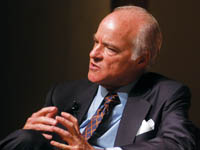
The truth of the matter however may be that there is another reason why Goldman isn't on the Blackstone deal, that reason is Henry Kravis, or perhaps Leon Black, depending on who you talk to. The New York Post reported that Goldman may be working with Kravis of Kravis Roberts & Co. on their IPO plans, or perhaps helping Leon Black of Apollo figure out if an IPO was in their future. Obviously with Goldman working with their competitors Blackstone decided to stay away. Mr. Blankfein makes a good point: "it's impossible for us to be in every piece of business." Of course more and more it seems that Goldman IS in every piece of business, but I digress . . .

So lets update our list of Private Equity Firms Going Public or at least considering it:

  1. Ripplewood Holdings: They took one of their funds public in Belgium.
  2. Goldman Sachs (GS): Okay, okay they aren't just a PE shop, but they do have one of the largest buyout funds, are publicly traded and have a forward PE ratio under 10. In my opinion GS is probably the safest/best play in the area.
  3. Fortress Investment Group (FIG): IPO'd in early February, has been very volatile.
  4. Blackstone Group: Closest private equity firm to an IPO. But should you invest?
  5. Carlyle Group: In "monitoring mode" for an IPO, whatever that means.
  6. Kravis Roberts & Co.: Probably just rumors . . .
  7. Apollo Management LP: Considering a partial sale to private investors.
  8. TPG Capital (formerly Texas Pacific Group): They aren't talking, but they are watching.
  9. Thomas H. Lee: Not considering a public offering because of lack of diversification.
  10. Permira: Firm's largest investor says younger management makes an IPO unlikely.
  11. Bain Capital: "Not actively looking at it, but we're always open-minded"
What does this all mean? With so much new money flowing in to buyout firms, with the universe of available deals shrinking and with the cost of debt rising, it doesn't seem like the boom in private equity can continue much longer. Each available deal is getting squeezed by competition and costs. Let us not forget that just this year a bidding war drove the cost of Equity Office Properties up by $3 billion!

But, with most of the top funds having billions to employ, the frenzy to snap up whatever deals remain will surely lead to an exciting 2007. I wouldn't be surprised if within the next year we see the largest buyout in history.

Tuesday, April 17, 2007

Fortress Investment Group's First 10-K

Fortress Investment Group (FIG) filed its first Annual Report this morning. As the first major hedge fund/private equity shop to go public the 10-K will be heavily scrutinized and for many it will be the first real peak inside an otherwise incredibly secretive part of our economy.

Needless to say, FIG has been enormously successful. They have grown their Assets Under Management (AUM) from $1.2 billion on December 31st, 2001 to $35.1 billion on December 31st, 2006. That is a 96.4% compound annual growth rate (CAGR). To handle the growth the firm employed 580 at the end of 2006, up from 400 the year before. With $1.52 billion of revenue that amounts to roughly $2.62 million of revenue per employee. For a comparison consider that Google produces $950K of revenue per employee and Wal-Mart manages just $183K. FIG's revenue mix consists of management fees and incentive income on its private equity funds, hedge funds and its publicly traded alternative investment vehicles which FIG calls "Castles." FIG also generates revenue from interest and dividends from its funds. Below is the PE/Hedge/Castle mix pulled straight off of the report:
The risks inherent in this revenue mix should be obvious. First of all the incentive fees make up a full 60% of the 2006 numbers shown above. This revenue is not guaranteed and is linked entirely to FIG's skill in outperforming its benchmarks. In some sense that portion of FIG's revenue is not entirely unlike investing directly in a FIG fund. In fairness however, the numbers above are only a small part of the story. A full 73% of FIG's revenues are derived from "interest and dividend income" as seen below:

The I&D income increased for a variety of reasons, but it too is linked the underlying performance of FIG's funds. Again the risk here is linked to FIG's underlying investment performance.

What are some other risks mentioned in the report?

  1. Key Man Risk: In other words it is the importance of FIG's human capital. If one of the key partners or MD's were to leave, provisions in the funds allow investors to withdraw capital. This is not even to mention the potential damage to returns.
  2. Competition: FIG hasn't been the only PE/Hedge firm to rapidly grow their AUM. There are only so many companies/strategies to invest in and it will be harder and harder to generate excess returns in such a competitive market.
  3. Litigation and Reputation Risk: When a firm consistently takes on new types of risk and is engaged in sophisticated investing techniques it is only a matter of time before one of their funds loses money. If litigation follows, perhaps combined with a general pock mark on FIG's sterling reputation assets may quickly leave the fold. Remember, most pension funds are at least somewhat sensitive to the reputation of their managers with whom they invest.
  4. Difficulty in Valuing Nonliquid Assets: FIG estimates that "as of December 31, 2006, $2.8 billion of investments in our private equity funds, $31.7 million of investments in our hybrid hedge funds and $256.4 million of investments in our liquid hedge funds are valued by internal models with significant unobservable market parameters." For those counting at home that is 10% of FIG's total AUM. If there is a change in the value of these assets this could materially change the performance of the company. In other words, because it has to "mark to market" its illiquid assets the firms numbers will always be estimates which may be revised.
Much of this information wasn't entirely new to the market, but certainly the most recent numbers were. The market seemed to have no problem digesting the 10-K as FIG was up 6% since market close on the 13th of April. This too after rising over 15% in the month leading up to the 13th. This puts the stock up roughly 70% or so from its IPO on February 8th. It is trading at a P/E in the low 40's. As many have predicted, the appetite of investors for exposure to this area of the market is substantial, no wonder Blackstone and Carlyle are both mulling over their options. It certainly seems that this party is not quite over yet.

Wednesday, April 11, 2007

Alternative Assets Update

There have been a lot of great articles on hedge funds, private equity and commodities recently that I haven't had time to write complete blog posts on. So, if you have a few minutes come take a look. The picture to the right is John Arnold, he is happy because he was on the other side of the Amaranth natural gas bet . . . oh yeah, and he made nearly $2 billion in 2006. He'll probably tell you that running a hedge fund beats working at Enron!

Hedge Funds
  1. "Behind the Hedge" is a great New York Magazine article on Hedge Funds, including bios on the "top dogs", "brainiacs", "bad boys", "single hitters", "home run hitters", and "whippersnappers" in the industry.
  2. "Top Ten" What did the top hedge fund managers make this year? Let me give you a quick breakdown: Jim Simons and John Arnold edged out the competition by making somewhere between $1.5-2 billion in 2006. Coming in 3-5 were the other biggest names in the industry: Eddie Lampert, T. Boone Pickens and Steve Cohen. All managed to make over $1 billion. Not a bad payday if you ask me.
  3. In this Bloomberg Article we learn that at the G-7 conference the leaders are calling in hedge fund managers to discuss "risks associated with their growing role in financial markets."
  4. In this CNN Money Article "Bernanke: Hedge Fund Oversight Working" our Fed Chairman speaks about hedge funds and the positive effects they have on the economy. His comments were well timed before the G-7 conference meets in Canada to discuss hedge funds.
  5. "Hedge Funds Still in Regulator's Sites": Perhaps a new administration in the US could encourage tighter regulation of hedge funds.

Private Equity Good News
  1. From the WSJ article "Big Deals, Yes They're Possible Without Buyout Clubs" we learn that LBO activity is on track to do close to $2 billion of deals this year and is making up nearly 30% of all merger activity. Not too shabby.
  2. PE shops raised $44 billion during Q12007. With this much liquidity I expect the buyout binge to continue for some time.
  3. More good news: Much was made of the fact that Congress was contemplating taxing "carried interest" at income tax rates (35%) rather than capital gains rates (15%). In "The Tax Threat to Private Equity? " we learn that for various reasons this change is unlikely to occur. I can almost hear the collective sigh of the big players in the industry.

Private Equity Bad News
  1. Bad News for the entire market: "Private Equity Breaks Records, IMF Gets Nervous" - While the level of activity has been high, the systemic risks are not going away. Many are saying that just like Sam Zell selling EOP high, the fact that Blackstone and others are looking to IPO may signal a peak in the PE Market.
  2. The PE deals are getting more expensive. Or so says Taneesha Kulshrestha in "Downside of PE." The multiples firms are willing to pay for earnings have increased, this could be another sign of a market top.
  3. The other major threat to PE is how the public perceives it. In "Hedge Funds lack buyout firm skills". The article first rips on hedge funds masquerading as PE shops, but goes on to say that miscommunicating their intent with the public, the employees and the media could lead to a significant backlash.
  4. Perhaps Private Equity needs an image makeover. Or so argues Andrew Sorkin in "How to Show that You're No Gordon Gekko."

Commodities
  1. "Crude Contract falls 4%" on unwinding of the "Iranian Risk Premium." It just makes you wonder if the Iranian government is placing bets on oil futures before it goes out and captures British soldiers. If I were a dictator in the Middle East looking to make a quick buck, it would seem a sensible strategy to me.
  2. Jim Rogers foresees the comming commodity boom. He is a little wacky but I think having commodity exposure in your portfolio these days is a must, even if used just as an inflation hedge.
  3. Prices at the pump have risen 2-3% since I last blogged about gas prices on March 26th. But, they appear to have leveled off for the time being. I will continue to track this as we approach the summer driving season. Check out the graph below courtesy of SanDiegoGasPrices.com (click to enlarge):

Saturday, March 24, 2007

Jim Cramer on Market Manipulation

Interesting to hear from Jim how hedge fund managers manipulate the market. I think videos like this make random walkers like Burton Malkiel, Eugene Fama and John Bogle lose sleep at night. It's hard to argue that markets are completely efficient in the face of such obvious distortions by traders like Jim.

Friday, March 16, 2007

Blackstone Group Going Public?

Rumor has it that Blackstone Group plans to go public, selling a 10% stake of its management company in an IPO later this year. This would be a huge initial public offering and the founders, Stephen Schwarzman and Peter Peterson, could split upwards of $4 billion dollars. Not a bad payday for two guys who started the firm with $400K in 1985.

But why on earth would a private equity firm go public? Don't these guys thrive on taking public companies private? Don't they regularly lament the street's focus on quarterly earnings targets? Just this year Schwarzman, who may control upwards of 40% of Blackstone, had this to say about going public:

"I think the public markets are overrated," he told a panel at the annual Super Return private equity conference last month. When referring to the efforts of a rival that pursued an offering a year earlier, he added: "To divert yourself like that and then take on that cost is really not worth it."
So why do it, and why now? Well to start out, Blackstone isn't just a private equity firm. Of their $64bb under management, only $28bb is in private equity. The rest is hedge funds, debt funds, restructuring funds, real estate funds etc. They are by all means a diversified asset management company. And though this isn't a pure liquidity play you can imagine that Schwarzman, who is the 73rd richest American according to Forbes, is salivating over having a couple extra billion to invest.

This would also be the second large private asset management firm to go public this year following Fortress Investment Group, and it could be the beginning of a trend in the space. Keep in mind they are only selling 10% of the firm, they will still retain much of the control. The real danger is that though they are only giving up 10% of the equity they will be giving up 100% of their secrecy in the process. Stay tuned for more information on how the deal will be structured. It certainly will be interesting to get a peak inside a company known for its secrecy.

Sunday, February 11, 2007

The Billion Dollar Grin


Hedge funds are not new to the investment world. But, the sheer volume of assets under management for the industry as a whole -- $1.225t at the end of 2006-- indicate that hedge funds aren't going anywhere fast. Perhaps even more astonishing than the explosive growth of AUM are the paydays of those hedge fund managers whose performance hasn't lagged with the size of their funds. Most notable are perhaps Eddie Lampert at ESL Invesments, the first to manager to earn over $1b in a single year and James Simons, who commanded a whopping $1.5b in 2005. Couple these salaries with the nearly $6.5 billion that Connecticut based hedge fund Amaranth Advisors LLC lost on a single bet on natural gas futures and you've got yourself quite a story.

Such news is bound to draw more attention to the industry, so it is no wonder some eyebrows have raised over at the SEC. In his quest to protect unsophisticated investors, SEC commissioner Roel Campos has proposed a new rule that would dramatically change who would be able to invest in hedge funds. When the law on accredited investors was adopted back in1982 an investor was 'accredited' if he/she had $1m of net worth or $200K of disposable income in two of the last 3 years. In 1982 that excluded all but 2% of US households. Today, due to inflation and other factors almost 9% of US households qualify. Clearly the SEC thinks that a change is needed, but is it really? Consider this from Richard Rahn, a director and board member of several economic policy organizations:

"Financial regulation is most often justified by arguing it is needed to protect all participants from those who would engage in fraud or theft, and to protect unsophisticated investors from losing money in investments they do not understand. The U.S. Securities and Exchange Commission (SEC) has just proposed that the amount of liquid net worth an individual must have before investing in hedge funds and other so-called risky investments be raised to as much as $2.5 million. People meeting a net liquid worth requirement are considered "accredited investors."

The new SEC proposal and other proposals for increased regulation raise a number of important questions, such as: Are hedge funds riskier than stocks and bonds that everyone is allowed to invest in? Is a liquid net worth requirement an appropriate measure of one's ability to evaluate an investment opportunity? Is it fair to the nonwealthy to only allow people who already have a large amount of money to invest in certain things that may provide higher rates of return? Why is liquid net wealth as opposed to total wealth an appropriate measure, particularly now that almost all real estate, and many other non-liquid assets, can easily be securitized?"

None of these questions have easy answers. The SEC's mission statement is "to protect investors, maintain fair, orderly, and efficient markets, and facilitate capital formation." While it is surely important to protect investors from fraud, it seems equally important to recognize the freedom of investors to choose their own investments. In my view increasing the universe of investment choices is a good thing. It should be left up to investors to analyze the risks.

Disclaimer

The content on this site is provided as general information only and should not be taken as investment advice. All site content, including advertisements, shall not be construed as a recommendation to buy or sell any security or financial instrument, or to participate in any particular trading or investment strategy. The ideas expressed on this site are solely the opinions of the author(s) who may or may not have a position in any company or advertiser referenced above. Any action that you take as a result of information, analysis, or advertisement on this site is ultimately your responsibility. Consult your investment adviser before making any investment decisions.