And the Bear Goes Down . . .
 Perhaps it is fitting that the first major non-bank financial institution to go belly up in the credit crisis is Bear Stearns. After all, the similarities to Drexel Burnham are striking, Bear notoriously refused to help during the LTCM crisis and the symptoms were certainly there. But, while many suspected they were on weak footing, I think most were surprised how swiftly they went under. After all, this is a firm that didn't have a single loss in 83 years going into 2007 and then in two consecutive years posted its first loss and now is getting bailed out. There is no doubt in my mind that we have now entered a new phase of this crisis. The contagion has spread into banks and other financial institutions and the "global margin call" will most likely continue as all institutions brace themselves from counterparty risk by de-leveraging and raising as much cash as possible. As much as I dislike continuously discovering that Nouriel Roubini has been correct, he once again has pegged the next leg of this meltdown.
Usually in times like these we can rely on a few market sages to come out with some words of comfort. Typically the rallying call is that the US is a large and resilient economy with an educated, mobile labor force with a commanding position atop the world economy, yada yada yada. But today the people I respect the most are largely fearful.
1) My former professor Martin Feldstein: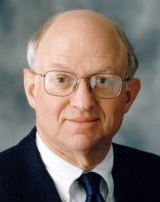
Harvard University economist Martin Feldstein said a six-year U.S. economic expansion has ended and the downturn could be substantially worse than past contractions.Hat Tip: Guardian, Bloomberg``I believe the U.S. economy is now in recession,'' Feldstein, president of the National Bureau of Economic Research, said in a speech at the Futures Industry Association conference in Boca Raton, Florida. ``The situation is bad, it's getting worse and the risks are that the situation could be very bad.''
Feldstein is a member of the NBER's business-cycle dating committee, a group of economists that marks the beginning and end of expansions and recessions. It could be months before the group officially declares when, if at all, a recession has started, committee members say.
Answering questions from the audience, Feldstein said the downturn could be the worst in the United States since World War Two. Feldstein said the federal funds rate, the Federal Reserve's benchmark lending rate, is headed down to 2 percent from the current 3 percent. He added that lower rates from the Fed would not have the same impact in the current downturn, in terms of reviving economic activity."There isn't much traction in monetary policy these days, I'm afraid, because of a lack of liquidity in the credit markets," he said.
2) Former Treasury Secretary Robert Rubin:

Former Treasury Secretary Robert Rubin said on Friday that the current U.S. mortgage crisis demands fresh action to stabilize the market.Hat Tip: Reuters"I believe the risks are serious enough to call for substantial additional action in the mortgage area, assuming that measures can be adopted that, when the pros and cons are weighed out, are on balance sensible," Rubin told a conference at the Brookings Institution.
"With respect to economic risk ... I have been around financial markets for a long, long time and I believe that we are in somewhat uncharted waters," Rubin said.
While the current crisis might pass "without inflicting significant additional damage on the economy," the risks are great enough for him to call for action.
3) Former Treasury Secretary and Former Harvard President Larry Summers:

"We are in nearly unprecedented times with respect to the financial strains."
"I believe that we are facing the most serious combination of macroeconomic and financial stresses that the United States has faced in at least a generation and possibly much longer than that."Summers, March 7, 2008 at Stanford. Here's the video of the speech.
Hat Tip: CR and Tanta
4) Jeremy Grantham:

Hat Tip: Barron'sBarron's: You, along with George Soros, have called this the worst financial crisis we've had in the post-war era.
Grantham: This is much more global than, say, the savings-and-loan crisis was. The world is obviously much more globalized than at any time since the late 19th century and much more interrelated in almost every way, certainly financially. To have the leading economy and the reserve currency having a major-league credit crisis would by itself make it more important than earlier ones.
Secondly, this occurred at a time of what I believe is the first global bubble in pretty well all asset prices, so there is a much greater degree of broad-based vulnerability. Then it is a question of degree, and how carried away the sloppy lending was: It was very carried away. Not just in the design of needlessly complicated instruments, but in the enthusiasm—recklessness one might say—with which they were sold.
Barron's: What about places to hide?
Grantham: That isn't something we can laugh off. Last time, there were plenty of opportunities: Bonds were cheap and TIPS (Treasury-inflation protective securities) were brilliant; real estate was cheap and REITs were brilliant. Even within equities, emerging markets were much cheaper than U.S. equities, and within U.S. equities, value stocks were only a little expensive and small-caps were only a little expensive and small-cap value was actually a little bit cheap. So you could really hide and could reasonably expect to make money, which we did in each of the three years of the bear market.
Since then, all those areas appear to have read the book on mean-reversion. Ten years would be a perfectly normal period of time to go from a peak of a great bubble [like the one in 2000], based on the history of bubbles and their aftermath, to the low. I have long thought that 2010 would be when we hit the biggest discount to fair value. Trend-line value on the S&P, by the way, in 2010 is 1100. (The S&P 500 traded at 1334 late last week.)


1 comment:
Post a Comment