Thursday, March 27, 2008

Jane Mendillo to Run Harvard's $34.9 Billion Endowment

Harvard Management Company today named Jane Mendillo, CIO to replace the departed Mohamed El-Erian:

After an extensive search, Harvard University has picked Jane Mendillo, chief investment officer for Wellesley College, to run the nation's largest college endowment.

Ms. Mendillo will take over July 1 as president and chief executive officer of Harvard Management Co., the company the runs the $35 billion endowment. She succeeds Mohamed El-Erian, who left last year to return to Pacific Investment Management Co. in Newport Beach, Calif.

During her five years at Wellesley, the school's endowment had an average annualized return of 13.5%, and grew to $1.7 billion from $1 billion. Prior to Wellesley, Ms. Mendillo worked for 15 years at Harvard Management, where she held a number of positions, including vice president of external management.

"Jane Mendillo has an excellent record as one of the most able and accomplished investment managers in the endowment world, as well as an extensive knowledge of the Harvard endowment and a deep commitment to higher education," said James F. Rothenberg, treasurer of Harvard University and chairman of the HMC board of directors.
Hat Tip: WSJ

Friday, March 21, 2008

Hilarious Bear Stearns Video from Jon Stewart


Wow.

Is Hillary Mathematically Eliminated?

The verdict is out, the superdelegates are the only way that Hillary Clinton can still win the Democratic Party's nomination. So, why is the media still portraying this as a neck and neck race? Politico.com may have the answer:

One big fact has largely been lost in the recent coverage of the Democratic presidential race: Hillary Rodham Clinton has virtually no chance of winning.

Her own campaign acknowledges there is no way that she will finish ahead in pledged delegates. That means the only way she wins is if Democratic superdelegates are ready to risk a backlash of historic proportions from the party’s most reliable constituency.

Unless Clinton is able to at least win the primary popular vote — which also would take nothing less than an electoral miracle — and use that achievement to pressure superdelegates, she has only one scenario for victory. An African-American opponent and his backers would be told that, even though he won the contest with voters, the prize is going to someone else.

People who think that scenario is even remotely likely are living on another planet.

As it happens, many people inside Clinton’s campaign live right here on Earth. One important Clinton adviser estimated to Politico privately that she has no more than a 10 percent chance of winning her race against Barack Obama, an appraisal that was echoed by other operatives.

In other words: The notion of the Democratic contest being a dramatic cliffhanger is a game of make-believe.

The real question is why so many people are playing. The answer has more to do with media psychology than with practical politics . . .
Please read on at Politico.com.

Meanwhile over at InTrade it appears that Obama's strength is truly evident, he has a 77.5%-23.3% advantage over Clinton:

Hat Tip: Intrade

Commodities Sag, but Why?

The punishment that financial markets have been doling out recently has finally hit the last bastion of strength: commodities. Most believe that the decline in everything from oil to corn to wheat is the result of investors raising cash:

Investors with losing trades in credit markets -- mortgage bonds or collateralized debt obligations, for example -- are being required by banks and others to set aside more cash to cover the money they borrowed to make trades, a process called "deleveraging." To raise the cash, some investors and hedge funds have sold some of their commodity winners.

"It's a classic deleveraging trade," says Bill O'Neill, a partner at investment-advisory firm Logic Advisors in Upper Saddle River, N.J. He says the unwinding of winning commodity trades has been playing out for most of this week, especially in the first half of the week.
Others give the victory to Bernanke:
Investors who had poured money into gold, oil and corn, seeking a hedge against inflation and a weak dollar, sold commodities to raise cash or buy stocks. The Reuters/Jefferies CRB Index of 19 commodities tumbled 8.3 percent this week, the most since at least 1956, after touching a record on Feb. 29.

``Bernanke took care of the commodity bubble,'' said Ron Goodis, the retail trading director at Equidex Brokerage Group Inc. in Closter, New Jersey. ``Commodities are coming back to earth. The stock market looks OK, and Bernanke is starting to look a little better.''

Concern that the central bank would let inflation get out of control eased after the Fed cut its key interest rate by 0.75 percentage point on March 18, less than the reduction of at least 1 point that investors had expected.

I think there is more to this than de-leveraging and investors respecting Bernanke's inflation-fighting prowess. I believe that investors are beginning to call into question the strength of global growth and sensing that it is simply not credible that India, China, Brazil and other engines of growth around the world will remain oasis' of prosperity when the world's largest economy (though technically smaller than the Euro-zone thanks to the weak dollar) experiences significant financial stress. Remember just 10 years ago Russia defaulted on billions of dollars of debt (remember LTCM) after the Asian crisis led to a global slowdown that pushed oil prices down to $11 a barrel and took away a major source of income for the Kremlin. Now oil prices are 10 times that on the back of one of the longest episodes of global growth on record. There is certainly plenty of room for commodity prices to fall further, especially if we start to see the slowdown in the US spreading more aggressively to the rest of the world.

Hat Tip: WSJ and Bloomberg

Tuesday, March 18, 2008

Fed Cuts by 75 bps to 2.25%

The Fed decided to cut the benchmark Federal Funds Rate 75 bps to 2.25%, not the full 1% that the market expected. I am marginally happy with this cut. I'm glad the Fed didn't do the full 1%. It sounds like they are trying to hold their ground on inflation and not seem too ready to debase the dollar and bail out Wall Street, but they also must realize that they are between a rock and a hard place.

Already the Dow is off over 100 points since the cut was announced, but is still up 200 points on the day. It will be an interesting 100 minutes to the close.

Hat Tip: CNBC Television

Fed Day

The Federal Open Market Committee (FOMC) meets again today for the first time since the end of January. But just because the FOMC hasn't had a formal sit down in 6 weeks doesn't mean the Federal Reserve hasn't been busy. On March 7th the Fed increased the Term Auction Facility (TAF) to $100 billion. On March 11th they announced a new $200 billion Term Securities Lending Facility (TSLF) designed to allow financial institutions to borrow from the Fed using MBS as collateral. Finally on Sunday the Fed agree to provide a $30 billion non-recourse 4 week loan to assist JPM's bailout of Bear Stearns. At the same time the Fed cut the discount rate by 25 basis points to 3.25% and announced a new Prime Dealer Credit Facility (PDCF) to provide overnight funding to prime dealers. All of these "Facilities" serve as extra support for the Fed's main policy action of lowering short term interest rates. They haven't been shy there either, cutting the Fed Funds rate 225 bps since September, including a 75 bps cut on January 22nd that was the largest rate cut in over 2 decades.

In the meantime since August 17, 2007 the dollar has fallen over 13%, the CRB commodity index has risen 32%, the S&P 500 is down nearly 10%, real interest rates are at or near negative and many are starting to realize that a recession may be better than debasing the dollar and stoking inflation even more. Yet, the Fed stands ready to cut the Fed Funds rate another 50-100 bps today.

I for one am worried that the Fed has effectively "run out of ammunition." This is the problem that Bill Gross ruminated about in his last market commentary, which I blogged about back on January 30th:

Because demand in the form of consumption has been artificially and fictitiously stimulated in recent years by financial engineering run amuck, there is a legitimate question as to whether its black hole imploding destructiveness can be totally countered with another dose of lower yields and deficit spending packages.
The economy is acting a bit like a drunken sailor, and unfortunately the Fed thinks the cure is another round of liquidity shots to which the sailor will most likely not respond well.

So what will the Fed do? We will know in 30 minutes and it is all up to these 10 lucky Fed governors:

Hat Tip: WSJ, Ritholtz, Rutledge

Monday, March 17, 2008

JP Buys Bear for $2 Share

A photo of the Bear Stearns building in New York taken this morning:

So what do you think? Did JP get a good deal or did Bear's stockholders get taken?

Hat Tip: CR

Friday, March 14, 2008

And the Bear Goes Down . . .

Perhaps it is fitting that the first major non-bank financial institution to go belly up in the credit crisis is Bear Stearns. After all, the similarities to Drexel Burnham are striking, Bear notoriously refused to help during the LTCM crisis and the symptoms were certainly there. But, while many suspected they were on weak footing, I think most were surprised how swiftly they went under. After all, this is a firm that didn't have a single loss in 83 years going into 2007 and then in two consecutive years posted its first loss and now is getting bailed out. There is no doubt in my mind that we have now entered a new phase of this crisis. The contagion has spread into banks and other financial institutions and the "global margin call" will most likely continue as all institutions brace themselves from counterparty risk by de-leveraging and raising as much cash as possible. As much as I dislike continuously discovering that Nouriel Roubini has been correct, he once again has pegged the next leg of this meltdown.

Usually in times like these we can rely on a few market sages to come out with some words of comfort. Typically the rallying call is that the US is a large and resilient economy with an educated, mobile labor force with a commanding position atop the world economy, yada yada yada. But today the people I respect the most are largely fearful.

1) My former professor Martin Feldstein:
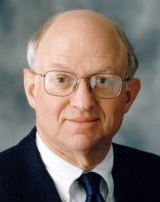
Harvard University economist Martin Feldstein said a six-year U.S. economic expansion has ended and the downturn could be substantially worse than past contractions.

``I believe the U.S. economy is now in recession,'' Feldstein, president of the National Bureau of Economic Research, said in a speech at the Futures Industry Association conference in Boca Raton, Florida. ``The situation is bad, it's getting worse and the risks are that the situation could be very bad.''

Feldstein is a member of the NBER's business-cycle dating committee, a group of economists that marks the beginning and end of expansions and recessions. It could be months before the group officially declares when, if at all, a recession has started, committee members say.

Answering questions from the audience, Feldstein said the downturn could be the worst in the United States since World War Two. Feldstein said the federal funds rate, the Federal Reserve's benchmark lending rate, is headed down to 2 percent from the current 3 percent. He added that lower rates from the Fed would not have the same impact in the current downturn, in terms of reviving economic activity.
"There isn't much traction in monetary policy these days, I'm afraid, because of a lack of liquidity in the credit markets," he said.

Hat Tip: Guardian, Bloomberg

2) Former Treasury Secretary Robert Rubin
:
Former Treasury Secretary Robert Rubin said on Friday that the current U.S. mortgage crisis demands fresh action to stabilize the market.

"I believe the risks are serious enough to call for substantial additional action in the mortgage area, assuming that measures can be adopted that, when the pros and cons are weighed out, are on balance sensible," Rubin told a conference at the Brookings Institution.

"With respect to economic risk ... I have been around financial markets for a long, long time and I believe that we are in somewhat uncharted waters," Rubin said.

While the current crisis might pass "without inflicting significant additional damage on the economy," the risks are great enough for him to call for action.
Hat Tip: Reuters

3) Former Treasury Secretary and Former Harvard President Larry Summers:
"We are in nearly unprecedented times with respect to the financial strains."
"I believe that we are facing the most serious combination of macroeconomic and financial stresses that the United States has faced in at least a generation and possibly much longer than that."
Summers, March 7, 2008 at Stanford. Here's the video of the speech.

Hat Tip: CR and Tanta

4) Jeremy Grantham:

Barron's: You, along with George Soros, have called this the worst financial crisis we've had in the post-war era.

Grantham: This is much more global than, say, the savings-and-loan crisis was. The world is obviously much more globalized than at any time since the late 19th century and much more interrelated in almost every way, certainly financially. To have the leading economy and the reserve currency having a major-league credit crisis would by itself make it more important than earlier ones.

Secondly, this occurred at a time of what I believe is the first global bubble in pretty well all asset prices, so there is a much greater degree of broad-based vulnerability. Then it is a question of degree, and how carried away the sloppy lending was: It was very carried away. Not just in the design of needlessly complicated instruments, but in the enthusiasm—recklessness one might say—with which they were sold.

Barron's: What about places to hide?

Grantham: That isn't something we can laugh off. Last time, there were plenty of opportunities: Bonds were cheap and TIPS (Treasury-inflation protective securities) were brilliant; real estate was cheap and REITs were brilliant. Even within equities, emerging markets were much cheaper than U.S. equities, and within U.S. equities, value stocks were only a little expensive and small-caps were only a little expensive and small-cap value was actually a little bit cheap. So you could really hide and could reasonably expect to make money, which we did in each of the three years of the bear market.

Since then, all those areas appear to have read the book on mean-reversion. Ten years would be a perfectly normal period of time to go from a peak of a great bubble [like the one in 2000], based on the history of bubbles and their aftermath, to the low. I have long thought that 2010 would be when we hit the biggest discount to fair value. Trend-line value on the S&P, by the way, in 2010 is 1100. (The S&P 500 traded at 1334 late last week.)

Hat Tip: Barron's

Disclaimer

The content on this site is provided as general information only and should not be taken as investment advice. All site content, including advertisements, shall not be construed as a recommendation to buy or sell any security or financial instrument, or to participate in any particular trading or investment strategy. The ideas expressed on this site are solely the opinions of the author(s) who may or may not have a position in any company or advertiser referenced above. Any action that you take as a result of information, analysis, or advertisement on this site is ultimately your responsibility. Consult your investment adviser before making any investment decisions.