Friday's over the last few months have been spectacular days for the market. In fact since March 16th we haven't had a single down day in th Dow to end the week. That all came to an end today with the Dow off 185 points to close the week down more than 2%. (Hat Tip: Bespoke Investment Group) While too much shouldn't be read into the fall, it shouldn't surprise people that the market was off this week with all of the bad news surrounding Bear Stearns' hedge fund blow-up and the bloody subprime debt market. Unless we have a flurry of deals over the weekend next week could be a repeat affair. Click the graph below to enlarge:

 In a widely anticipated move, Yahoo CEO Terry Semel stepped down today and will be replaced as CEO by Yahoo founder Jerry Yang. Why was Semel shown the door? Quite simply Semel hasn't been able to do much with Yahoo's stock in the almost 3 years since rival Google's IPO. In fact on August 18th 2004, the day before Google's IPO, Yahoo closed at $28.48. Today Yahoo opened at $27.72 still under its value from nearly 3 years ago. In the meantime Google has risen over 600% from $85 to $515. Needless to say many Yahoo investors have become quite frustrated. Recently there have been rumors swirling about the possibility of a Microsoft takeover as well as discussions with Time Warner and eBay. But, to date nothing has come of it. Maybe now with Semel out of the way Yahoo will make a move. After opening the day trading at $27.72 the stock will likely open tomorrow around $30. Where it goes from there is anyone's guess.
Here is Yahoo versus Google over the past 3 years. I think it was time for Semel to leave:

 On the eve of Blackstone's planned IPO a proposed private equity tax law could throw a wrench in CEO Stephen Schwarzman's plans. Private equity firms make their money via an asset based fee and a performance fee. This is typically* expressed as "2-and-20": the 2% fee is on all assets under management and is taxed at ordinary income rates up to 35% and the 20% is a cut of the firm's profits and is taxed at the 15% capital gains rate.
Under pressure to combat increased income inequality and increase tax revenue, Federal lawmakers had been tossing around the idea of raising taxes on private equity firms by re-characterizing "carried interest" as ordinary income. It appears that they have curbed that discussion for now.
However, since Fortress and Blackstone would both be publicly traded partnerships, Congress, led by Charles Grassley and Max Baucus (pictured above), could overturn a 20 year old tax law that taxes publicly traded partnerships at 15%. Instead these publicly traded private equity firms would be taxed at corporate rates of up to 35%. This won't effect private equity firms who stay private but it will certainly influence whether or not they choose to go public.
If such a bill were to pass Congress and avoid a presidential veto it would certainly dampen the valuations private equity firms have been receiving and create massive disincentives to going public. The law, were it to pass, would grandfather in Fortress and Blackstone for a period of 5 years.
Fortress Investment Group (FIG) was off 6.5% today on the news and is off nearly 30% since late March. I think investors may be overly pessimistic on FIG because of this bill. FIG's effective tax rate today is already somewhere near 25% and much of their income is not tax-advantaged. If, as I expect, this bill doesn't pass this might be a great time to pick up a few shares of FIG on sale. Heck even if the bill does pass, FIG is safe for 5 years and even with conservative growth projections and higher taxes, buying FIG at $23.50 with a PE of 21.5 is a steal.

* Some firms charge more, some less.
Go to Article from Marketwatch >>
Go to Article from DealBook >>
Go to Article from Bloomberg >>
Actor and former Tennessee Senator Fred Thompson hasn't yet announced his campaign for President, but that hasn't stopped him from quickly becoming the early Republican leader in the InTrade prediction markets. In just three months of trading he has passed McCain, Romney and Guiliani in rapid succession:

You can see his rise has been fairly steady and received quite a boost after asking to be released from Law & Order in May and forming an "exploratory committee" in June:

To be perfectly honest I don't know much about Fred's economic policies, though from a quick glance at his blog it looks like he is strong fiscal conservative. All I knew about him before that little bit of research was his stellar performance as Jim Robinson in the "Barbarians at the Gate" made for TV movie . . . but I digress . . .
 Yesterday a hedge fund managed by Bear Stearns announced their intention to sell $4 billion of mortgage backed bonds. The fund -- the High-Grade Structured Credit Strategies Enhanced Leverage Fund -- has been hurt by their exposure to the subprime sector and is allegedly down almost 25% this year. One way to track the damage in the subprime sector is to monitor the ABX Home Equity BBB Index. Here is some quick background on the ABX index courtesy of Nouriel Roubini's Blog:
“One way to measure the effects of problems in the sub-prime mortgage sector is to look at Credit Default Swaps (CDS). Remember that these CDS contracts effectively work as a kind of insurance policy for banks or other holders of bad mortgages. If the mortgage goes bad, then the seller of the CDS must pay the bank for the lost mortgage payments (alternatively ... if the mortgage stays good then the seller makes a lot of money).
The index that measures the CDS market for home equity is called the ABX.HE index. The sub-variation of this index that refers to risky sub-prime loans is called the ABX.HE BBB index.
I just checked the ABX.HE BBB index. It has dropped by about 5-7% since July of 2006. This is a substantial drop! Notably, there was a major plummet of the index starting in Dec 2006 when some of the dealers in risky mortgages started going belly up.
So what does this mean? It means that someone out there is now having to cough up the losses in the bad loans. It could be hedge funds, or maybe overseas lenders. But someone is starting to see some losses happening on their balance sheets, and the problem is going to grow significantly in 2007.”
Keep in mind Roubini had this on his blog back on January 11th, 2007. Back then the ABX Home Equity Index had fallen from 101 to 93 in 6 months, which at the time surely seemed like a "substantial drop." Since then the index has fallen precipitously. It now trades in the low 60's and looks ready to re-test its February lows. See graph below courtesy of Markit:

So who is paying for these bad loans? Well in this case its the investors in Bear's fund and perhaps the banks who helped Bear lever up 10 to 1 . . . it makes you wonder who is next.
The dramatic 20% rise in the 10-Yr Treasury Note yield over the past month didn't let up today. It currently sits just under 5.25%. If the note passes through that level it will mark the second psychological level the yield has climbed past in the past two weeks.

There are two main areas where rising yields can hurt the economy. The first is housing, as yields are positively correlated with mortgage rates. The second is stocks, where the buyout boom and stock buybacks have in large part been financed with cheap debt and both practices will slow as borrowing becomes more expensive. We are still holding our 10 Year Treasury Note target steady at 5.5% by the end of the year.
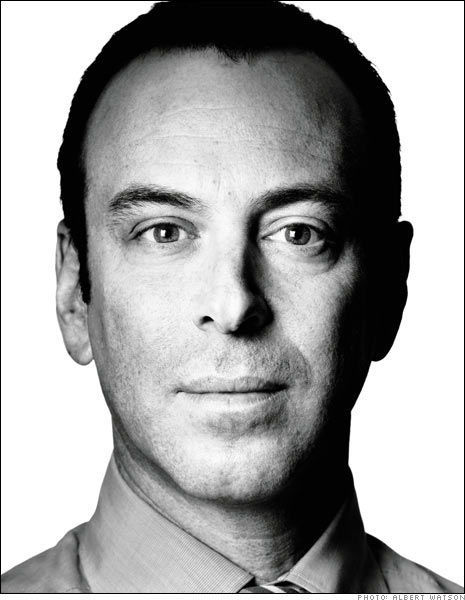 I have blogged many times about Eddie Lampert. First bragging about his income and again showing off his beautiful Connecticut home. Today I have news of a different variety; I learned that Eddie Lampert's ESL Investments is hoping to raise $3 - 5 billion USD in new investment capital. Due to Lampert's concentrated investment style in which he takes large stakes in a few companies he has placed a long holding period on the capital. There will be two successive 5 year lock-ups with one opportunity to withdraw. The minimum investment is set at $25 million. I would encourage any of my readers who have $25 million investable lying around to take Eddie up on the opportunity. Very rarely is there an opportunity to invest with a top notch manager with such a long track record of 25%+ returns. Frankly though I am a little surprised he set the investment minimum so low, if he truly wanted patient capital he could easily have set a floor of $100 million, making the investment off-limits to all but institutions, endowments, central banks and the wealthiest of families.
Interestingly Eddie has hired Goldman Sachs to help raise the money. Seeing as he probably wants nothing to do with marketing I think that this is a smart move, though probably unneccesary. I understand why Eddie turned to Goldman; they just raised $20 billion for their buyout fund and have no problem raising large sums of money fast. But, I really don't think the problem will be raising the money I think the problem will be stemming the flow of investors who want in.
I can think of two big investors who may want in right off the top: China and Goldman itself. It was back in mid-May that I heard China was buying a pre-IPO stake in Blackstone worth some $3 billion. An investment of a few billion in ESL would seem like a logical second big move for China to diversify their foreign currency reserves and invest with one of the top hedge fund managers. After all what is $2 billion to China, a couple of days of currency reserves? It also makes sense that Goldman itself will probably take a stake. Trading and principal investments make up a full two thirds of their revenue and they are always looking for additional ways to put their capital to work. After all if they are willing to dump millions into RadioShack even after its stellar Q1 performance. Perhaps they are just caught up in the success of Radio Shack CEO Julian Day, an Eddie Lampert hire who helped bring Kmart/Sears out of bankruptcy.
The most exciting part of this development for me is that I think that Lampert probably has a couple of ideas in the works and is looking for a little bit (cough) more capital so that he can complete them on his own. I am a huge fan of ESL and am intrigued to see what his next move is. For those of us who don't have $25 million to invest you can always pony up the $176 for a share of Sears Holdings. It isn't ESL, but its as close as you are going to get. With over $2 billion of cash on their balance sheet I'm sure Eddie will find a way to make some money with Sears.
 A handful of pundits and bloggers have mentioned this as a good time to trim positions in Apple. Until today though the stock didn't give any support to those arguments. However now the stock is up 43% on the year, trades at a P/E nearing 40 and is perhaps overdue for a pullback. In its first major move to the downside today the stock is off 2.5% in afternoon trading in spite of strength in the broader indexes. Look for Apple to pull back further particularly if the market struggles with weak data this week. With the iPhone release approaching there is enough downside risk to warrant traders trimming their positions. On the other hand Steve Jobs and Apple are on a roll and the near term momentum they are experiencing could very likely continue. Decisions like this are never easy, but anytime a stock is up 40%+ on the year I think taking some gains is intelligent.

Disclaimer
The content on this site is provided as general information only and should not be taken as investment advice. All site content, including advertisements, shall not be construed as a recommendation to buy or sell any security or financial instrument, or to participate in any particular trading or investment strategy. The ideas expressed on this site are solely the opinions of the author(s) who may or may not have a position in any company or advertiser referenced above. Any action that you take as a result of information, analysis, or advertisement on this site is ultimately your responsibility. Consult your investment adviser before making any investment decisions.


