Monday, June 11, 2007

Housing Weakness To Continue

On an intuitive level, does the San Diego home price chart to the right look like a buying opportunity or a selling opportunity? Many economists are finally starting to agree with those of us who foresaw a multi-year, agonizing fall in real estate prices. In a weekend Journal article entitled "Economists See Housing Slump Enduring Longer", many economists admitted that there is very little good data out there to support an argument that the housing slump will end this year. Many originally were calling for a Fed rate cut or two and another dip down in mortgage rates to help stave off further declines. However in all likelihood the Fed will hold rates at 5.25% for the rest of the year. In fact at this point I think that it is slightly more likely that the Fed's next move will be to raise rates, not lower them. Without a drop in rates, and with continued weakness in Treasury prices I think the housing market has very little to support it. Current 30-year fixed mortgage rates are around 6.7% up considerably from a year ago and inventories continue to rise across the country.

In San Diego foreclosures are hitting record levels. In March, April and May there were 1727 homes that went to trustee's sale, which is 37% of all foreclosed homes. That 3 month total is more than ALL the homes that went to trustee's sale in San Diego in 2003, 2004 and 2005 combined. As all of these homes get dumped on the market, price declines are inevitable. I expect these numbers to continue to increase and for the % of foreclosure's going to trustee's sale to reach 50%.

The other major risk is the huge volume of subprime loans that are set to recast over the next 6 months. If subprime borrowers can't afford a 15-25% increase in their mortgage payments and can't qualify for a prime loan product things could get ugly. Many of these borrowers were banking on home prices to increase in order to help them keep their homes. Unfortunately since most of these borrowers used 100% financing and home prices are down in San Diego over the past 2 years it is likely that many subprime borrowers here are underwater. This does not bode well for home prices for the foreseeable future. Remember this graph? Many of the monoline subprime lenders aren't around anymore but the loans still are!

Friday, June 8, 2007

Gross on Endowment Style Investing

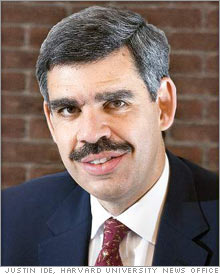
Buried in Gross' secular analysis was an important observation I felt echoed what Harvard's $30 billion endowment manager Mohamed El-Erian mentioned in an interview last week with Fortune magazine:

"In effect, and we put this in the secular outlook, most investors these days are trying to be like Yale and Harvard now, which is fine I suppose, although it brings with it risks of its own in terms of leverage and ultimately compressing risk spreads to levels that are unattractive.


But the race is on to be like Yale and Harvard now. And that to us suggests that purchases of safe, low-yielding assets—U.S. Treasuries, German bunds and other bonds—are likely to decline and flows into commodities and companies and equity-like types of investments will likely increase. We’re not talking about a major overnight shift but at the margin."

In a single week two of the most respected voices in asset management pointed out the same trend; more and more investors are seeking to mimic the high return, low volatility returns of the Harvard and Yale endowments. (Come to think of it these two guys were both bond managers at PIMCO before El-Erian made the jump to Harvard Management Company, so it makes sense they share similar viewpoints.) These Harvard and Yale imitators aren't just other endowments, but also include foreign central banks (like China) with trillions of dollars of investable assets, large family offices with hundreds of millions of investable assets and even retail investors. For many David Swensen's books on endowment style investing have become bedside reading and the Yale and Harvard annual endowment reports are pored over for hints of future moves. As Gross points out this isn't necessarily a bad thing, but as more and more of these investors seek to diversify into commodities, absolute return vehicles, commercial real estate and other assets classes flows into U.S. treasuries will decrease putting downward pressure on treasury prices.

Bill Gross: A "Bear Market Manager"

As I have written before Bill Gross is a man capable of moving markets. Gross spoke at PIMCO's annual secular forum about his view of market trends over the next 3-5 years. The main theme that the markets (and the media) picked up on was that Gross -- a longtime treasury bull -- has now donned a new cap and is calling himself a "bear market manager." This shift is largely due to his expectation of continued rapid 4-5% global growth and increased inflationary pressures from commodity prices and rising wage costs in emerging markets. He has raised his 10-year treasury yield target to 4-6.5% from 4-5.5% which is a significant change for a firm who's total return strategy profited greatly from over 20 years of price appreciation and yield.

Where does Gross see opportunity in a secular bear market for bonds? Well maybe we should start with where he doesn't see opportunity:

"Credit markets, high yield markets, and volatility itself, all are compressed to near historic lows and suggest that at this point, taking major risk positions in order to be like Yale or a Harvard certainly wouldn’t be justified.


It does not make sense for PIMCO to be buying even investment-grade corporates at 30 to 35 basis points over LIBOR. The spreads are too narrow and the risk of a cyclical correction is too great."

Okay, we get it, we've been saying for years that the global liquidity boom has compressed risk spreads. So if risk isn't where to capture return where can return be obtained? Gross' answer: shorten duration, get emerging market currency exposure and heighten commodity exposure. This makes sense! The large US trade deficit, a declining appetite for treasuries and years of global 5% growth are putting downward pressure on the dollar. As demand increases on everything from oil to corn to soybeans to copper, commodity exposure will be crucial. Investors who hold too many assets denominated in US dollars and have failed to allocate a portion of their portfolio to commodities and TIPS will suffer if inflation ticks up and the dollar weakens further.

Thursday, June 7, 2007

DXKSX: An ETF to Play Falling Treasury Prices

I have been tracking the Direxion 10 Year Note Bear 2.5X Inverse ETF (DXKSX) to monitor how well it does at tracking the upward yield pressure we have been predicting in the 10 Year Treasury note. So far the strategy appears to be playing out fairly well. The ETF is up over 11% since early March when I first started tracking it:


If the 10 Year Treasury yields continue their push towards 5.5% as we have predicted it is safe to expect that this ETF will continue to capture much of that return.

The Endowment Model is Getting Crowded Says El-Erian

I'm sure David Swensen realized when he wrote "Pioneering Portfolio Management: An Unconventional Approach to Institutional Investment" that he would inevitably attract a few followers to his diversification philosophy. His current counterpart at Harvard, Mohamed El-Erian, confirmed in an interview last week that Swensen's book has played a role in convincing endowment managers to diversify more fully, crowding some of the markets that Yale and Harvard have been in for years. In El-Erian's own words:

"More people are replicating what we do. The endowment model is very much in vogue. There have been many articles in the press trumpeting how well endowments like Harvard's and Yale's have performed. And David Swensen, who brilliantly heads up Yale's endowment with impressive long-term performance, has written a great book showing how endowment management is done. So now lots of central banks and pension funds are trying to become more like endowments. The space is becoming more crowded.

Accordingly, we are spending a lot of time thinking about the related challenges and how we would be able and willing to differentiate ourselves. We have to play the smarter game. And that's always complex, never easy."

As always we will be tracking significant changes in Harvard and Yale's endowment portfolios looking for clues on how El-Erian plans on differentiating himself.

Also in the article were 4 key themes that El-Erian think effect long-term investors:
  1. International Diversification and Commodity Exposure are increasingly important.
  2. Large Caps will outperform small and mid-cap companies in part because of the boom in private equity.
  3. Inflation is picking up, using TIPS is a good hedge against that rise.
  4. Foreign Central Banks will look to diversify their reserves to other parts of the world.
To read the article in full go here.

Wednesday, June 6, 2007

Time to Short the Shanghai Composite?

I'm not a big fan of calling the direction of entire markets, but this one seems like a no-brainer. The Shanghai Composite index is way up from its lows in 2005. It rose from its valley near $1110 back in December of 2005 to its peak over $4330 in May of this year. Over the same time period average weekly trade volume on the exchange increased from 8 billion shares to nearly 55 billion. More and more speculative investors are jumping into the Chinese markets with the hope of making a quick buck.

Meanwhile the index has retreated from its peak and has dipped below virtually all of its moving averages to rest at $3776. Why do I think that the index has very little upside at these levels? Well first and foremost the P/E ratio for the index is 39.82, which is clearly in bubble territory. But, the main reason I believe the Shanghai index is overextended is that the Chinese government has shown its willingness to step in when needed to protect investors from themselves. Just last week the Chinese finance ministry tripled the tax on trading to $0.03. The markets did not take the news well, tumbling 6.5% in the first day of trading after the increase. Since then the market is off another 7% as speculators adjust to the new tax and investors gauge whether that relatively minor change is enough to trip up the bull market. Many probably realize that the finance ministry has more tools in their toolbox to curb speculation and if the market tries to test its highs they will be forced to use them.

Remember it was just a year ago that Shanghai real estate was all the rage. However with a series of tax and administrative measures the government effectively chased speculation out of that market. Unfortunately much of that money has landed in the stock market and the government will in all likelihood be just as diligent in controlling speculation as they were in real estate.

Key thing to notice in the chart below: Yahoo! only tracks volume up to 4 billion. You can see that has been inadequate for quite some time.

Will Banks Cool Private Equity Boom?

Just a week ago I wrote about how many key private equity players were worried about a bubble. The New York Times reported this morning that several banks were cooling on lending to private equity firms to fund buyouts. RBS admitted there are signs that the market is "quite toppish." Mezzanine lender Intermediate Capital also warned that deals were becoming more risky. The warning from Intermediate Capital is not good news considering the fact that they may well be the largest lender to private equity firms. Of course when you are talking about billion dollar deals, banks don't work alone. Usually banks form large syndicates in order to spread the risk around. Be that as it may, as more and more banks become more careful with the risk they take on, they may well pull the punch bowl from the party. I have a feeling that until their is a dramatic default the boom still has some legs.

In the past week investors have punished Merrill Lynch for its role in providing bridge loans for large private equity deals, like the $32 billion deal for First Data. While I am prone to worry about the potential for a deal to blow-up an leave banks and investors up a creek, some, including Dana Cimilluca at the WSJ think that all the words of caution from private equity players and banks alike may actually be a good sign for the M&A boom to continue:

"As we see it, the Merrill scare is a brick in the wall of worry the private-equity industry seems to be facing these days. One executive after another — many of them participants in the buyout boom — is sounding alarm bells about a bubble. The latest is Royal Bank of Scotland CEO Fred Goodwin, who says the private equity market is getting "quite toppish". His comments echo remarks recently from Bank of America chief Ken Lewis. Moody’s Investors Service in a note today questions whether a march upward in long term interest rates could slow the debt issuance behind the buyout and stock repurchase booms. (It doesn’t think so.)

What does this all mean for the big question everyone is asking — how much longer the good times in the deal world will last? Investment types often refer to a chorus of caution as a bullish sign, in part because it keeps investor behavior from becoming too irresponsible. If that’s the case, it could perversely mean the M&A frenzy still has some legs."

While Dana thinks the caution is a good sign, I disagree. As private equity firms and lenders start to wise up to the risks, the cost of debt rises and many of these deals start to crumble. If one major deal falls through it could send an ice cold tremor through the market putting in peril all the other deals that are in the pipeline and crushing the holders of bridge loans that were hoping that their debt would quickly be replaced with junk.

There is one concrete graph to look at that may point to why banks are starting to sour on the deals presented to them. I wrote about this last week as well. That is the rise in the yield of the 10-year treasury. Just last week the yield curve normalized and the 10-year yield is now moving aggressively towards 5% (see graph below/ click to enlarge).


**One last note. Insofar as the rise in the markets this year has been fueled by all the M&A activity, if lending tightens up and the deals slow down the market may well correct sharply. In fact a major credit event could finally restore the volatility to markets that many have been calling for.

Monday, June 4, 2007

How Long Will the Real Estate Downturn Last?

Well if this downturn is of the exact same length as the last downturn we would have about 3 years before we hit a trough in home prices. However, many expect the current housing downturn to be worse than the previous one because the run up in prices was longer and more dramatic. Also, the experience will be different in different markets. Incredibly overheated markets -- like San Diego for instance -- could be in for a longer and more painful downturn than say Fort Collins, Colorado. (click the graph to enlarge).


Courtesy of the New York Times.

Disclaimer

The content on this site is provided as general information only and should not be taken as investment advice. All site content, including advertisements, shall not be construed as a recommendation to buy or sell any security or financial instrument, or to participate in any particular trading or investment strategy. The ideas expressed on this site are solely the opinions of the author(s) who may or may not have a position in any company or advertiser referenced above. Any action that you take as a result of information, analysis, or advertisement on this site is ultimately your responsibility. Consult your investment adviser before making any investment decisions.